

For buyers selling LED lighting products into Europe, CE requirements can feel complicated. A product may need to satisfy electrical safety, electromagnetic compatibility, restricted substances, energy-related product rules, labeling requirements, and technical documentation expectations. When the supplier does not understand the process, buyers may face delayed shipments, failed project approval, wrong labels, missing documents, or expensive retesting.
This article explains how LED lighting manufacturers can help you smooth the European CE certification process. In many markets, buyers use the phrase “CE certification” casually, but it is more accurate to think in terms of CE marking, EU conformity assessment, technical documentation, and a Declaration of Conformity. The right manufacturer can make that process much easier by providing product data, stable samples, test support, labeling coordination, and repeat production control.

First: Understand What CE Marking Means
CE marking is a visible indication that a product placed on the European Economic Area market meets applicable EU requirements. For many LED lighting products, this does not simply mean adding a CE logo to a box. It means identifying the applicable legislation, checking relevant harmonised standards, testing or assessing the product, preparing technical documentation, issuing the EU Declaration of Conformity, and marking the product correctly.
The European Commission’s CE marking information explains that CE marking indicates conformity with EU safety, health, and environmental protection requirements. Buyers should treat CE as a compliance system, not only a graphic mark.
This is why supplier selection matters. A manufacturer that only says “we can do CE” without explaining the product scope, test reports, standards, labels, or documentation may create risk. Enton LED’s guide on red flags when choosing a commercial lighting supplier explains why vague certificates and unclear communication should be handled carefully.
1. Help Identify Which EU Requirements May Apply
LED lighting products are not all the same. A simple low-voltage LED strip, an AC downlight, a dimmable track light, a solar outdoor light, and a smart wireless fixture may fall under different technical requirements. A good manufacturer helps the buyer map the product category before testing starts.
Depending on the product, common EU-related considerations may include:
- Electrical safety requirements for certain voltage ranges.
- Electromagnetic compatibility requirements.
- Restriction of hazardous substances in electrical and electronic equipment.
- Energy-related product or lighting-specific performance rules.
- Radio equipment rules if the product includes wireless control.
- Market-specific language, label, packaging, and importer information.
For electrical products, the European Commission provides information on the Low Voltage Directive and the EMC Directive. Buyers should confirm the exact requirements for their product and market before placing a large order.
2. Provide Accurate Product Specifications Before Testing
Testing can become slow and expensive when the product specification is unclear. Before sending samples to a laboratory, the manufacturer should provide accurate product data: model number, rated voltage, wattage, driver type, LED type, CCT, CRI, beam angle, IP rating, dimming method, housing material, cable, plug, and accessory information.
This data helps the buyer and testing body understand what is being evaluated. It also reduces the risk that the test report covers one version while the buyer later orders another version. If the driver, PCB, LED chip, housing, cable, or controller changes, the documentation may need review.
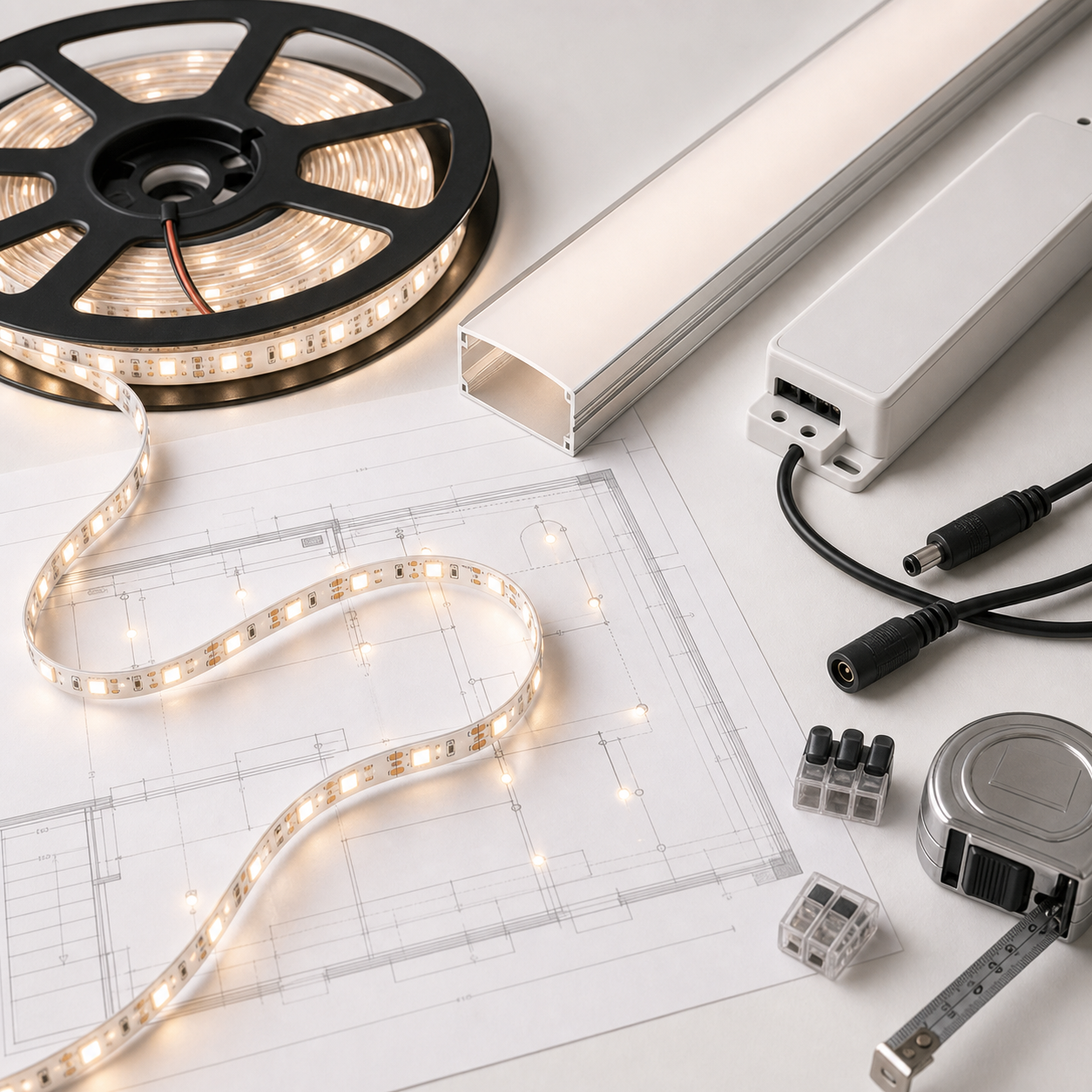
For LED strip products, specification control is especially important because voltage, wattage per meter, copper thickness, IP rating, cut interval, adhesive, and driver matching can affect both performance and compliance planning. Enton Light’s article on selecting LED strip lights for large-scale engineering projects explains why these details matter before approval.
3. Supply Stable Samples for Testing
CE-related testing should use samples that represent mass production. A common sourcing problem is that the test sample is different from the bulk product. If the tested sample uses one driver but production uses another, or if the waterproof structure changes after testing, the buyer may lose confidence in the documentation.
A reliable LED manufacturer supports the process by preparing stable samples, confirming the bill of materials, and keeping records of the tested version. The supplier should also explain whether the sample is a standard model, customized model, or pre-production version.
Buyer tip: Keep one approved sample and one packaging sample for future comparison. Use the same model number, specification sheet, and artwork version across the test report, Declaration of Conformity, packaging, and purchase order.
4. Coordinate with Testing Laboratories
Many buyers rely on third-party laboratories or certification service providers to test lighting products. The manufacturer can make this process smoother by answering technical questions, providing product drawings, preparing extra samples, supplying component information, and making design adjustments if a test issue appears.
Good manufacturer support can reduce several delays:
- Missing wiring diagrams or product drawings.
- Unclear driver or controller information.
- Wrong model numbers on samples or documents.
- Packaging labels that do not match test documents.
- Slow response when a lab requests clarification.
- Design changes made after testing without document updates.
For higher-risk projects, buyers should involve the laboratory early instead of waiting until production is finished. Early review can identify whether the product structure, driver, label, or manual needs adjustment before mass production.
5. Prepare Technical Documentation
Technical documentation is a key part of CE compliance. It helps show how the product was designed, assessed, tested, labeled, and controlled. A lighting manufacturer can support the buyer by organizing product records and supplying the technical data needed for the file.
A typical documentation package may include:
- Product description and intended use.
- Model list and product photos.
- Specification sheet and rated parameters.
- Design drawings, wiring diagrams, and circuit information when applicable.
- Bill of materials or key component information.
- Test reports and standard references.
- Label artwork, packaging artwork, and user manual.
- Risk assessment or product safety review where required.
- Production and quality control records.
Buyers should not wait until the shipment date to ask for documentation. It should be discussed during sample approval and confirmed before packaging is printed.
6. Support the EU Declaration of Conformity
The EU Declaration of Conformity is an important document in the CE marking process. It identifies the product, the responsible party, the applicable legislation and standards, and the basis for declaring conformity. Depending on the business model, the manufacturer, importer, authorized representative, or brand owner may have different responsibilities.
Manufacturers can help by providing accurate test reports, model numbers, standard references, product descriptions, and technical data. However, buyers should understand their own role if they import or place products on the European market under their brand. The European Commission’s CE marking guidance is a useful official starting point, but buyers should get professional compliance advice for high-value or regulated projects.
For private label products, packaging and documentation must align. Enton Light’s private label packaging checklist for LED products explains how label data, barcodes, manuals, compliance marks, and final inspection should be controlled.
7. Check Labels, Manuals, and Packaging Before Printing
Many CE process problems appear on the label or packaging, not only in the product itself. If the product label has the wrong voltage, missing model number, incorrect CE mark, wrong importer details, or inconsistent rating data, the buyer may need to reprint packaging or relabel products after arrival.
The manufacturer can help by reviewing artwork before printing and checking that product labels, carton marks, user manuals, and packaging match the approved specification. This is especially important for private label orders, distributor packaging, and multi-language European markets.
Label and packaging review should cover:
- Correct model number and SKU.
- Correct rated voltage, wattage, CCT, CRI, and IP rating when shown.
- Correct CE mark placement and size.
- Correct warnings and installation notes.
- Correct importer or responsible-party information if required.
- Manual language and wiring instructions.
- Batch number or traceability code.
8. Maintain Production Consistency After Testing
A product can pass testing and still create problems if mass production is changed later. The manufacturer must control key components, especially drivers, LED modules, cables, controllers, housings, insulation materials, and waterproof structures.
Buyers should ask how the manufacturer controls changes after testing. If a component becomes unavailable, the supplier should notify the buyer before substituting it. A new driver or controller may affect safety, EMC, dimming, performance, or documentation.
For commercial lighting buyers, this is part of supplier risk management. Enton LED’s article on hidden risks of importing low-cost LED lights explains why low-cost substitutions can increase total cost after arrival.
9. Build CE Support Into OEM/ODM Cooperation
OEM and ODM lighting projects often involve customized models, private-label packaging, new accessories, new drivers, or market-specific versions. This makes CE planning more important. If the buyer changes the product after testing, documents and labels may need to be updated.
A good OEM/ODM manufacturer helps buyers plan CE support from the beginning:
- Use existing tested product platforms where possible.
- Confirm which customization changes may affect testing.
- Prepare samples that match the final production design.
- Keep private-label packaging aligned with technical documents.
- Control production changes after approval.
- Support repeat orders with consistent components.
For brands building product lines, Enton Light’s guide on LED strip OEM/ODM manufacturing explains how supplier cooperation can reduce development cost and make product launch more scalable.
10. Keep Records for Repeat Orders and Market Checks
CE support does not end after the first shipment. Buyers may need documents for customs, retailers, project owners, distributors, market surveillance, or after-sales investigation. The manufacturer should help keep records of product versions, test reports, labels, batch numbers, and packaging files.
Useful records include:
- Approved sample photos and specification sheets.
- Test report numbers and issue dates.
- Declaration of Conformity version.
- Label and packaging artwork version.
- Batch or production date records.
- Driver and key component records.
- Inspection photos before shipment.
Record control helps the buyer respond faster if a distributor, installer, customs broker, or market authority asks for supporting information.
Why Enton LED Is a Practical Partner for Europe-Focused Buyers
Enton LED supports global buyers with indoor lights, outdoor lights, solar lights, product communication, factory-side coordination, packaging awareness, and inspection support. Buyers can review the product range through the All Products page, including indoor lights, outdoor lights, and solar lights.
For Europe-focused sourcing, a manufacturer should not only provide a price. It should help buyers define specifications, prepare samples, coordinate test support, align documentation, check labels and packaging, and maintain production consistency. That support can make the CE marking process smoother and reduce risk before shipment.
If you are preparing LED lighting products for the European market, start the CE discussion early. Share your target market, product category, voltage, driver requirement, packaging plan, and expected documentation. The earlier the manufacturer understands the compliance path, the easier it is to avoid delays and costly rework.