
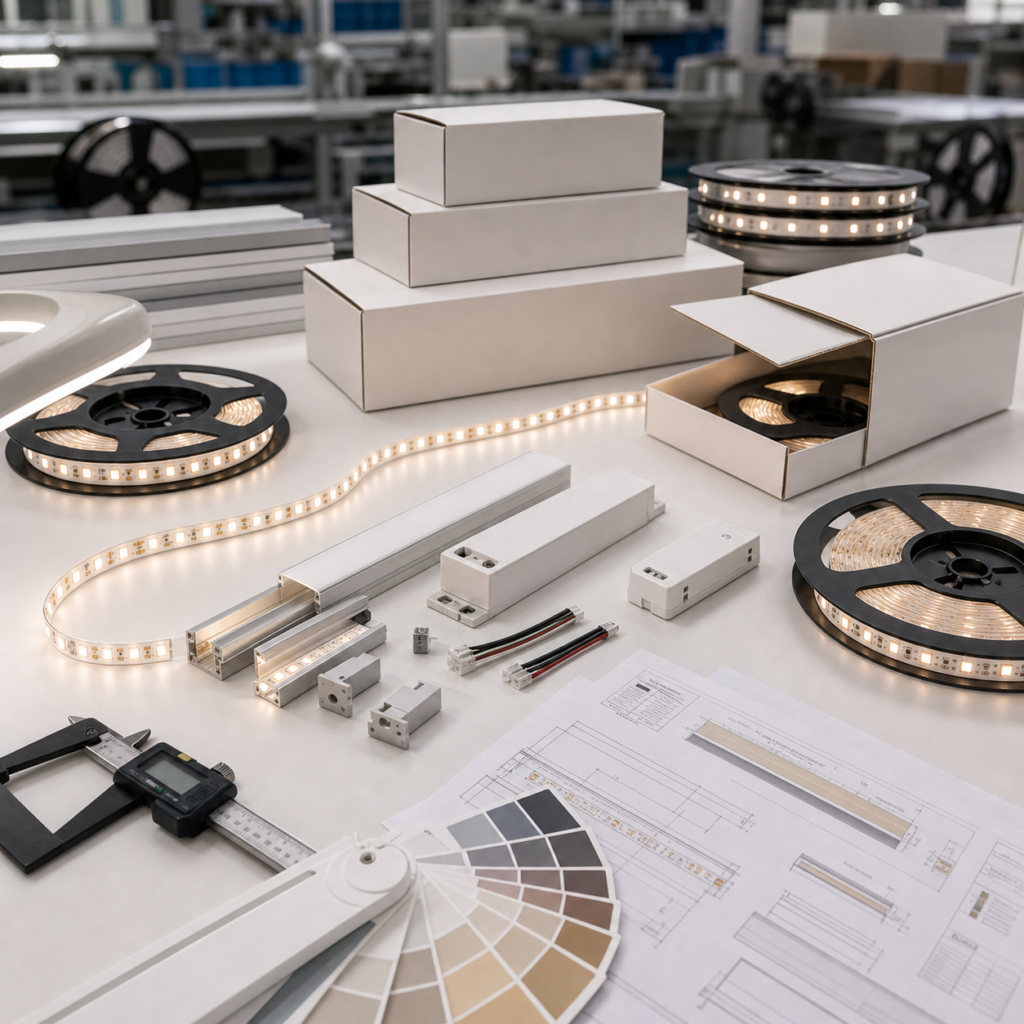
Private label packaging can turn a standard LED product into a professional brand asset. For lighting distributors, importers, retailers, contractors, and e-commerce sellers, the box is often the first physical touchpoint between the buyer and the product. It communicates quality, reduces installation confusion, supports warehouse control, and protects the product during shipping.
But customized packaging can also create problems if the buyer only focuses on logo placement. LED products need accurate model information, electrical ratings, barcode planning, compliance marks, installation warnings, carton strength, accessory control, and repeatable artwork management. This guide provides the ultimate checklist for customizing private label packaging for LED products, from early planning to final production approval.
If you are building a broader lighting brand, Enton Light’s article on LED strip OEM/ODM manufacturing explains how private-label packaging works together with product development, supplier cooperation, and scalable product families.
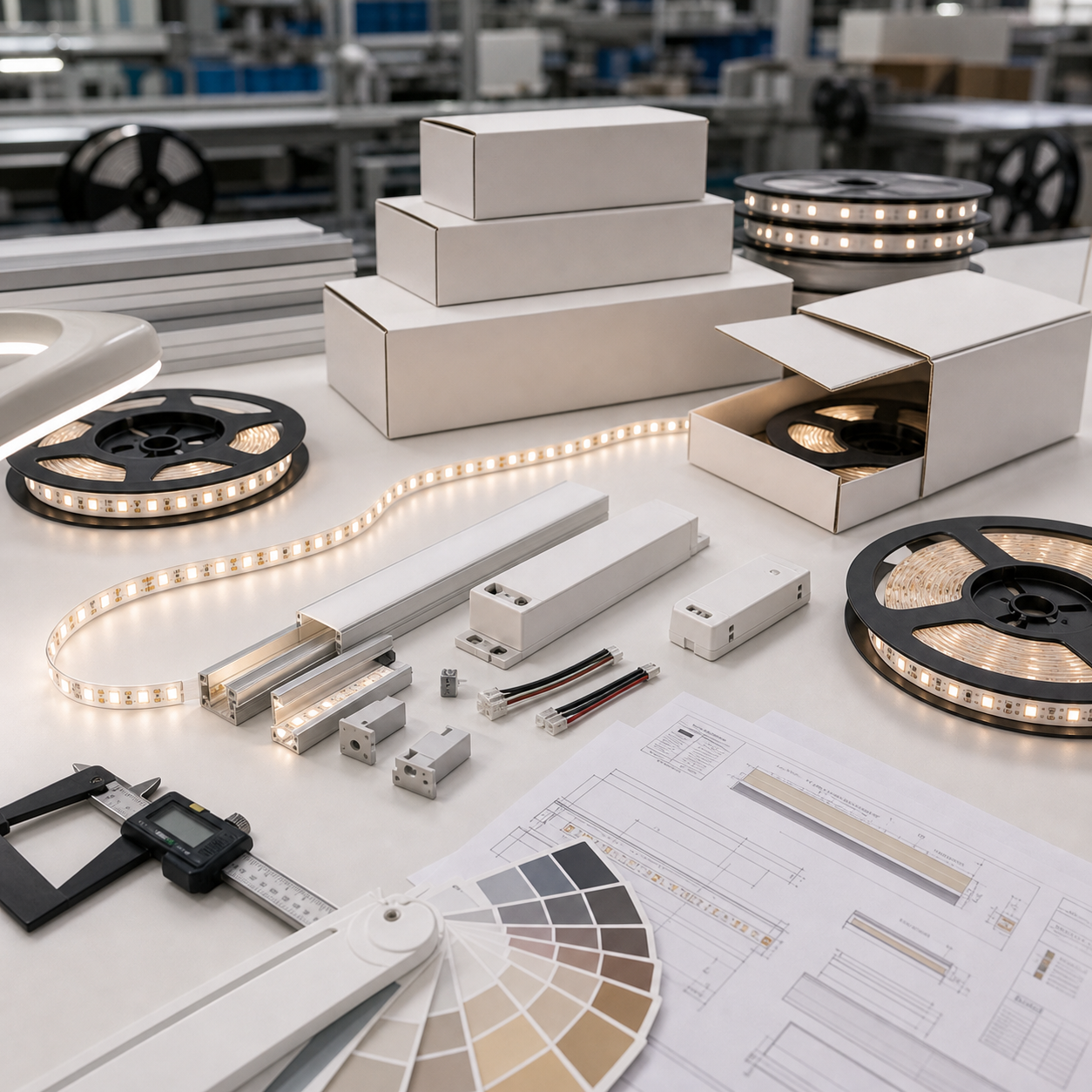
Why Private Label Packaging Matters for LED Products
LED lighting products are technical products, even when they look simple. A downlight, track light, wall light, pendant light, outdoor fixture, solar light, or LED strip may require specific voltage, wattage, CCT, CRI, driver, IP rating, dimming method, installation accessories, and warranty information. If the packaging does not communicate these details clearly, mistakes can happen in warehouses, retail shelves, project sites, and customer service.
Good private label packaging helps buyers:
- Make the brand look more professional.
- Reduce confusion between similar SKUs.
- Support barcode scanning and inventory control.
- Protect the product during international shipping.
- Improve installer understanding through clear labels and manuals.
- Build repeat order consistency across product families.
- Reduce after-sales questions caused by missing information.
For professional buyers, packaging is not decoration. It is part of product quality.
Checklist 1: Define the Packaging Goal
Before designing artwork, decide what the packaging must do. A product for a retail shelf may need strong visual branding, product photos, feature icons, barcode placement, and multilingual text. A project product may need simpler but clearer labeling, carton marks, model numbers, and installation data. An e-commerce product may need stronger shipping protection and scan-ready codes.
Ask these questions first:
- Will the product be sold retail, wholesale, online, or project-only?
- Will the packaging be seen by the final customer or only by installers?
- Does the box need a product photo, line drawing, or technical icon set?
- Does the market require multiple languages?
- Will distributors, warehouses, or marketplaces need barcodes?
- Will the same packaging system cover a full product family?
The answer affects box structure, artwork style, label layout, barcode format, and production cost.
Checklist 2: Build a Clear Product Information Hierarchy
LED packaging must make the right information easy to find. Buyers often make the mistake of putting too much marketing text on the box while hiding the details that warehouses, installers, and customers actually need.
A practical LED product label should include:
- Brand name and product series.
- Model number or SKU.
- Product category, such as LED downlight, track light, wall light, or LED strip.
- Voltage, wattage, lumen output, CCT, CRI, beam angle, and IP rating when relevant.
- Finish color, size, cut-out size, or length.
- Dimming type or control compatibility.
- Quantity per box and accessories included.
- Barcode, batch number, and carton mark.
For LED strip products, this information becomes even more important because similar-looking reels may have different voltage, wattage per meter, LED density, color type, IP rating, and cutting interval. Enton Light’s guide on selecting LED strip lights for engineering projects explains why technical details must be controlled before installation.
Checklist 3: Confirm Barcode and SKU Planning
Barcodes are not only for retail shelves. They help warehouses, distributors, e-commerce sellers, and sales teams control inventory and reduce picking mistakes. Before printing private label packaging, buyers should decide which products need unique codes and how SKUs will be structured.
For buyers selling through retail or marketplace channels, barcode planning should be handled early. GS1 US barcode information is a useful reference for product identification, UPCs, GTINs, and company prefixes. Buyers in other markets should check the barcode requirements of their local channel, distributor, or marketplace.
Good SKU planning avoids confusion. A simple model system may include product category, wattage, CCT, finish, beam angle, and market version. The same logic should appear in internal ordering documents, carton labels, and product packaging.
Checklist 4: Verify Compliance Marks and Market Requirements
Compliance marks and technical labels must be treated carefully. A box should not show a certification mark, CE marking, recycling symbol, energy label, or safety claim unless it is correct for the exact product and destination market. Incorrect marks can create customs issues, project rejection, retailer problems, or brand risk.
For North American lighting safety, UL Solutions lighting safety testing and certification is a useful reference. For products placed on the European market, the European Commission’s CE marking information explains responsibilities connected with compliant goods.
Before packaging production, buyers should confirm:
- Which compliance marks are allowed on the box.
- Which model numbers are covered by test reports.
- Whether the driver, lamp, or full luminaire is covered.
- Which warnings or installation notes are required.
- Whether importer, distributor, or manufacturer information must appear.
- Whether the product needs a market-specific label or manual.
This step should happen before artwork approval, not after boxes are printed.

Checklist 5: Match Packaging Structure to Product Protection
Attractive packaging is not enough if the product arrives damaged. LED fixtures can be scratched, dented, bent, cracked, or loosened during shipping if the packaging structure is weak. The packaging design should match product weight, shape, surface finish, accessories, and shipping route.
Buyers should review:
- Inner box material and thickness.
- Foam, paper insert, blister tray, or molded pulp protection.
- Scratch protection for painted, polished, or anodized surfaces.
- Separate bags for screws, clips, drivers, cables, and accessories.
- Outer carton strength and size.
- Pallet loading, stacking direction, and drop risk.
- Moisture protection for long-distance shipping.
For outdoor lights, solar lights, and larger fixtures, carton strength and internal protection can be more important than cosmetic box design. A strong outer carton can save more money than a beautiful but fragile retail box.
Checklist 6: Prepare Installation Manuals and Warning Cards
Many after-sales problems come from installation confusion. Packaging should include the information installers need to wire, mount, cut, dim, or maintain the product correctly. This is especially important for LED strips, dimmable fixtures, outdoor lights, and products with separate drivers or accessories.
A practical manual or warning card may include:
- Installation steps and diagrams.
- Voltage and wiring notes.
- Driver and dimming compatibility.
- Cutting and connection notes for LED strips.
- Indoor or outdoor use limitations.
- IP rating limitations and sealing warnings.
- Maintenance and cleaning instructions.
- Warranty and service contact information.
For commercial projects, clear documentation reduces site questions and protects the buyer from unnecessary service claims.
Checklist 7: Keep Artwork Files Controlled
Private label packaging creates more file-management risk than many buyers expect. One outdated file can lead to wrong wattage, wrong barcode, wrong CCT, missing certification mark, or mismatched carton label. Artwork should be controlled like a product specification.
Buyers should create a simple artwork approval process:
- Use version numbers for box artwork, labels, manuals, and carton marks.
- Keep editable files and final print-ready files separate.
- Approve artwork with product model and date.
- Check barcode readability before mass printing.
- Confirm color, logo, fonts, and image quality.
- Keep a record of the final approved file used for each order.
This is especially important for brands with multiple SKUs, multiple CCT options, or different market versions.
Checklist 8: Plan Packaging for Product Families
A strong private label system should not be designed one product at a time. Buyers should think in product families. A consistent packaging system makes the brand easier to recognize and makes warehouses easier to manage.
For example, the same layout can be used across recessed downlights, track lights, pendant lights, outdoor wall lights, and LED strip products, while changing the product image, model, specification table, and barcode. This keeps the brand coherent without redesigning every box from zero.
Buyers can explore Enton LED’s broader All Products range to see how different lighting categories can support a complete product line.
Checklist 9: Request a Packaging Sample Before Mass Production
Artwork approval on a screen is not enough. Buyers should request a physical packaging sample or a clear pre-production photo set before mass printing. This helps check color, box structure, label position, barcode size, material feel, and product fit.
The packaging sample should be checked with the actual product inside. Confirm that the fixture, driver, accessories, manual, and protective materials fit correctly. If the product moves too much inside the box, shipping damage may occur. If the box is too tight, workers may damage the finish during packing.
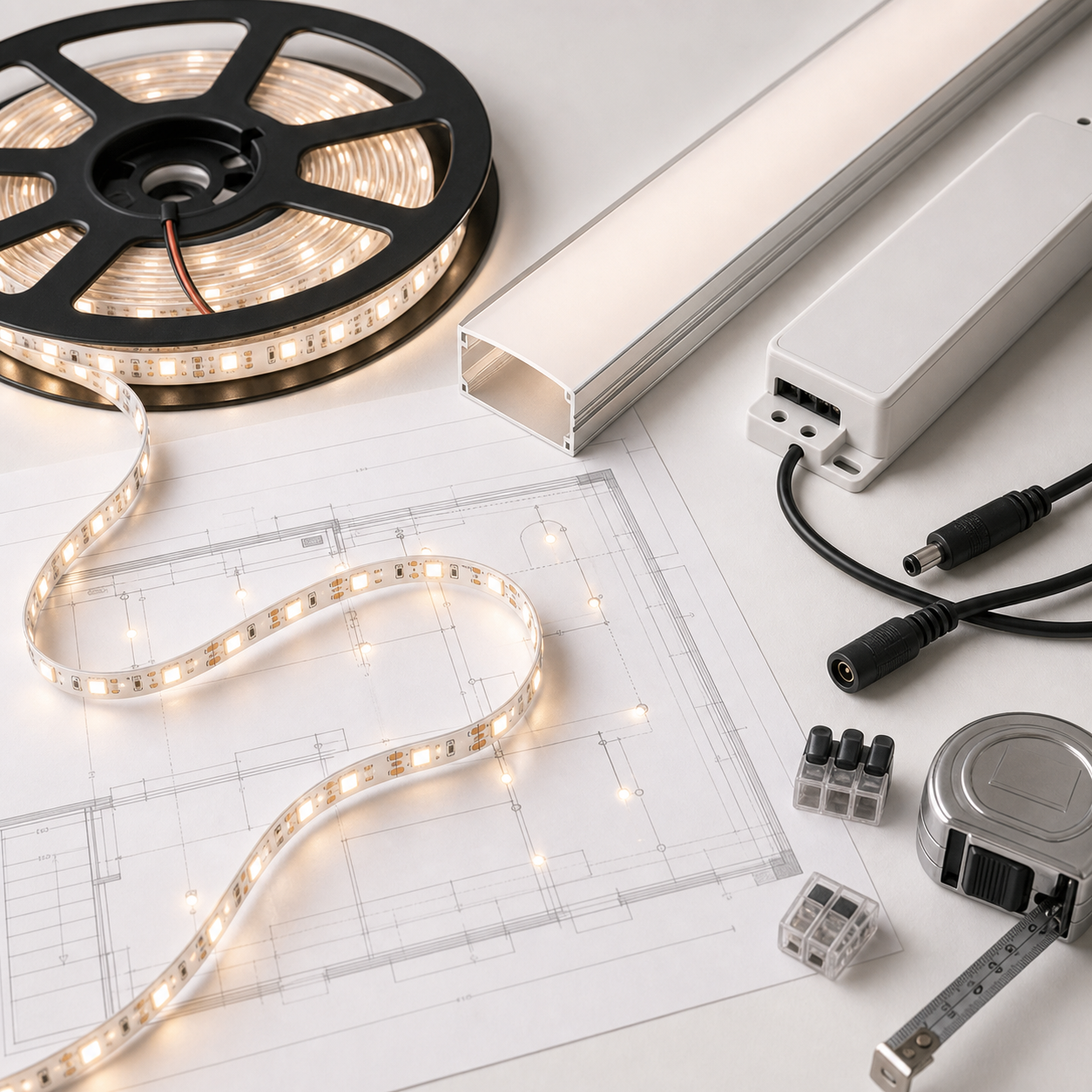
For LED strip products, confirm reel size, bag size, label placement, connector storage, and whether the product can be identified without opening the package.
Checklist 10: Confirm Final Inspection Before Shipment
Packaging should be part of final inspection. A product can pass electrical testing but still fail commercially if the wrong label, wrong barcode, missing manual, or damaged carton is found after arrival.
A final packaging inspection should check:
- Correct model and specification on the box.
- Correct barcode and readable print quality.
- Correct carton marks and quantity.
- Correct accessories and manuals.
- Clean product surface and protective packing.
- Outer carton condition and seal quality.
- Batch number or production traceability.
- Photos of packed goods before shipment.
For buyers concerned about supplier risk, Enton LED’s guide on red flags when choosing a commercial lighting supplier explains why quality control, documentation, and communication should be evaluated before large orders.
How Enton LED Supports Private Label Packaging
Enton LED supports global buyers with indoor lights, outdoor lights, solar lights, OEM/ODM cooperation, product communication, factory-side coordination, packaging awareness, and inspection support. For buyers building private-label LED product lines, this support can help connect product selection, specification control, artwork management, packaging samples, and repeat production.
Private label packaging works best when the buyer and supplier treat it as part of the product system. The box, label, barcode, manual, accessories, carton, and product specification should all match. When these details are controlled well, packaging can reduce after-sales pressure, improve brand presentation, and make repeat orders easier.
If you are planning private label packaging for LED products, start with a clear product list, confirm market requirements, prepare the packaging data table, approve a physical sample, and inspect packaging before shipment. Enton LED can help buyers turn those steps into a more reliable sourcing process.