
Outdoor LED lighting projects often fail because of the parts people do not see. A fixture may look strong, bright, and waterproof from the outside, but if the LED driver is not suitable for rain, heat, cold, voltage fluctuation, dust, salt air, or long cable runs, the whole system becomes vulnerable. In harsh environments, the driver is not just an accessory. It is one of the most important reliability components in the lighting system.
This guide explains how to choose the right outdoor waterproof LED driver for harsh environments. It is written for contractors, engineering buyers, distributors, lighting brands, and project managers who source outdoor LED lights for facades, landscapes, parking areas, walkways, industrial sites, coastal projects, signage, and public infrastructure. Buyers can also compare Enton LED’s outdoor lights, outdoor wall lights, flood lights, and All Products page when planning full project packages.
Why the LED Driver Matters Outdoors
The LED driver converts incoming power into the correct output for the LED fixture or LED strip system. If the driver is unstable, undersized, poorly sealed, or exposed to conditions it cannot handle, the lighting system may flicker, dim, overheat, fail early, or become unsafe.
Outdoor environments are harder than indoor environments because the driver may face:
- Rain, humidity, and water spray.
- Dust, sand, insects, and dirty air.
- High daytime heat and low nighttime temperatures.
- Salt air in coastal locations.
- UV exposure and weathering.
- Voltage instability and surge events.
- Long cable runs and voltage drop.
- Frequent maintenance difficulty after installation.
A good outdoor LED driver is selected for the real site, not only for the fixture wattage. The same driver that works under a covered canopy may not be suitable for a coastal facade, exposed landscape installation, or industrial yard.
Start with Constant Voltage vs Constant Current
The first decision is whether the project needs a constant voltage driver or a constant current driver. Choosing the wrong type can damage LEDs or create unstable performance.
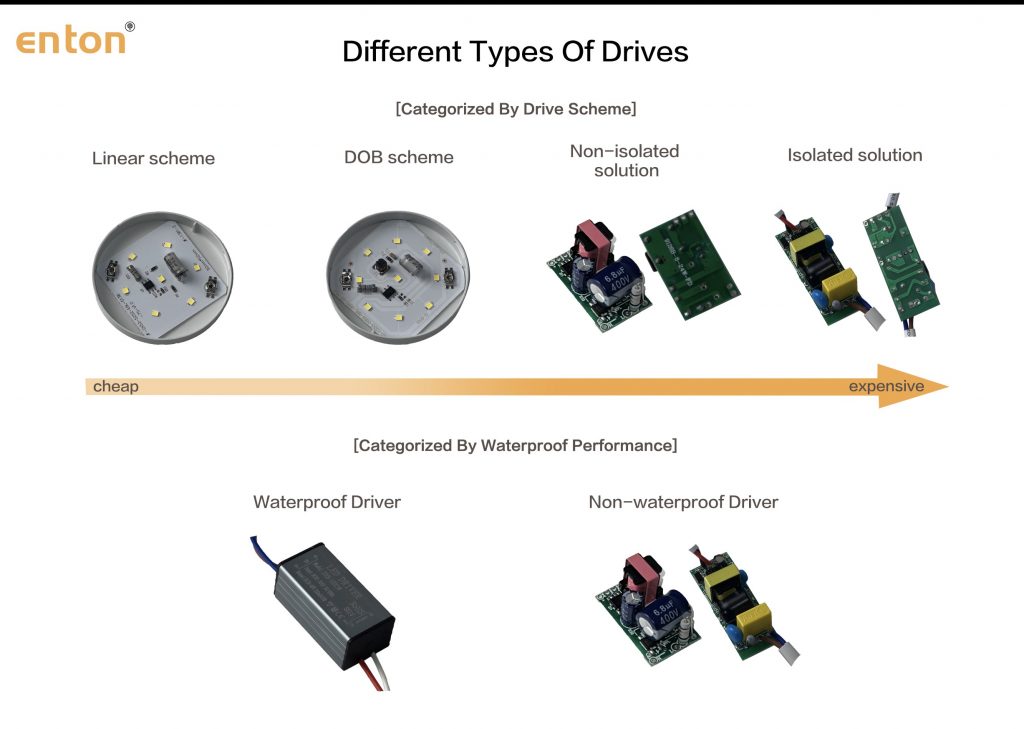
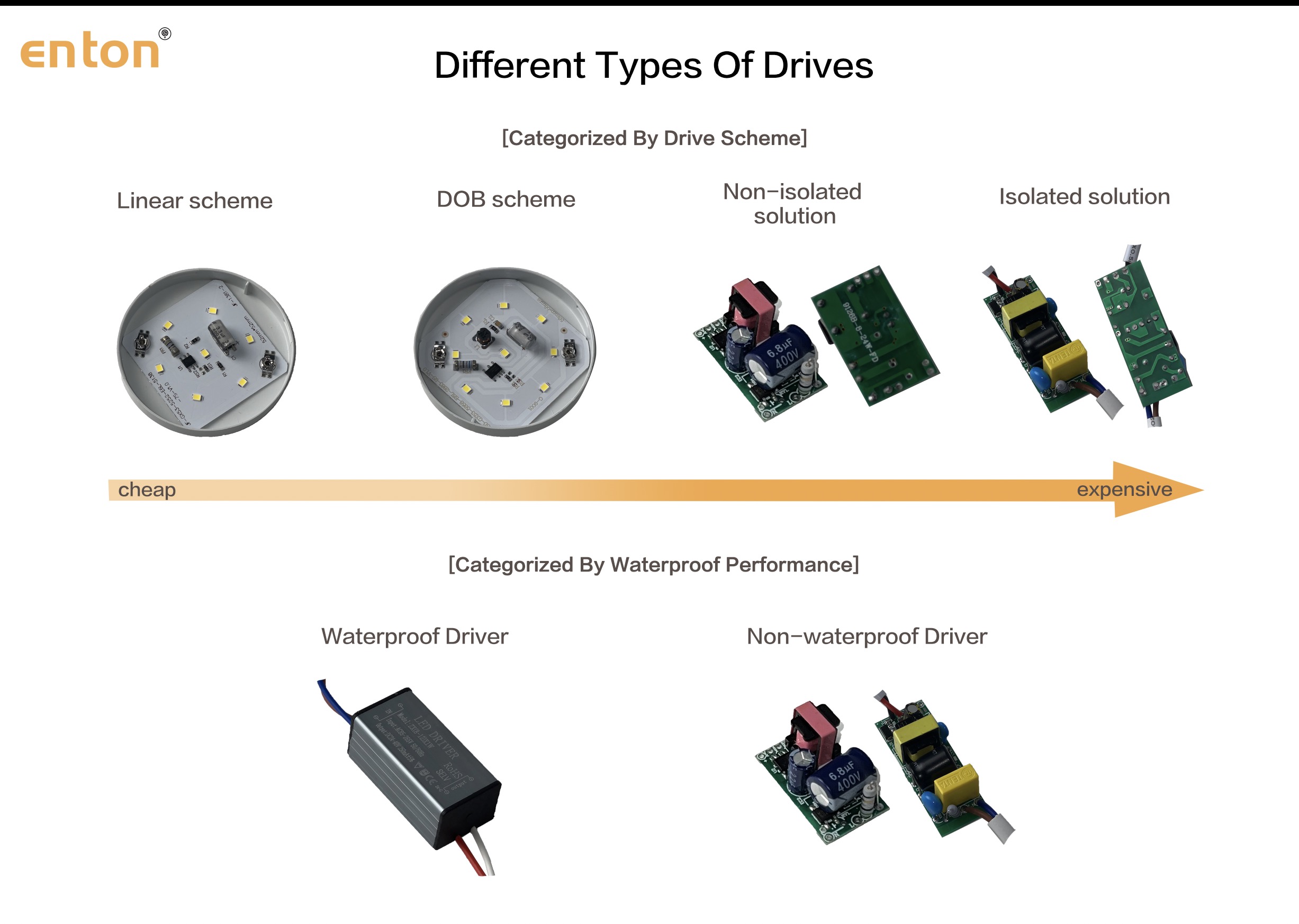
Constant voltage drivers provide a fixed output voltage, such as 12V or 24V. They are commonly used for LED strip lights, linear modules, signage, and systems where the LED product has internal current control.
Constant current drivers provide a fixed output current, such as 350mA, 700mA, or 1050mA. They are commonly used for many LED modules and fixtures where the driver controls current directly.
Before comparing waterproof ratings, buyers must confirm the LED product’s required driver type, output voltage or current, power demand, dimming method, and wiring structure. For large outdoor strip or linear projects, Enton LED’s guide on selecting LED strip lights for large-scale engineering projects explains why voltage, driver load, connectors, and installation details should be planned together.
Calculate the Required Power with a Safety Margin
A common mistake is choosing a driver with exactly the same wattage as the LED load. In outdoor projects, this leaves no margin for real operating conditions, temperature, voltage variation, or future replacement differences. A driver that always runs near full load may operate hotter and fail sooner.
For constant voltage systems, calculate total load first:
Total LED load = watts per meter 脳 total meters
Then add a safety margin. Many project buyers use about 20% to 30% headroom as a practical starting point, depending on the driver, installation, and supplier guidance.
Example:
- LED strip load: 14.4W per meter.
- Total length: 20 meters.
- Total load: 14.4 脳 20 = 288W.
- With 25% margin: 288 脳 1.25 = 360W.
In this example, a 360W or larger suitable outdoor driver may be considered, subject to voltage drop, cable length, installation temperature, and manufacturer recommendations.
Understand IP Ratings Before Saying Waterproof
The word “waterproof” can be misleading. Outdoor drivers should be selected by a clear ingress protection rating and by the actual installation condition. IP ratings describe protection against solids and water, but they do not mean the driver can be installed carelessly in every outdoor location.
The IEC IP ratings overview explains that IP ratings classify protection against dust, accidental contact, and water. For outdoor LED drivers, buyers often compare ratings such as IP65, IP67, or IP68, but the correct choice depends on exposure.
General interpretation for project discussion:
- IP65: commonly used for dust-tight and water-jet protected applications, often suitable for many outdoor covered or exposed-but-managed areas.
- IP67: offers protection against temporary immersion under defined test conditions, often considered for more exposed outdoor areas.
- IP68: intended for continuous immersion conditions defined by the manufacturer, useful only when the product and installation are designed for it.
Buyers should not choose an IP rating from the label alone. Ask how the driver is sealed, how cables enter the enclosure, whether cable glands are included, whether connectors match the same protection level, and whether the installation position allows drainage.
Compare IP Ratings with NEMA Enclosure Needs
Some North American projects also use NEMA enclosure types to describe environmental protection. IP and NEMA are not exactly the same system, so they should not be treated as direct one-to-one labels without checking details.
The NEMA enclosure standard information is useful when buyers need to think about environmental conditions around electrical equipment. For outdoor drivers, the key point is simple: confirm the project requirement, market expectation, and local electrical rules before approval.
If the buyer’s market asks for NEMA-related protection, UL listing, CE documentation, or other certification, the driver and the finished lighting product should be reviewed as a complete system, not only as separate parts.
Temperature Range Is Critical in Harsh Environments
Outdoor drivers may operate in very hot or very cold conditions. A driver installed inside a sealed metal box under direct sun can experience much higher temperature than the surrounding air. A driver used in a cold climate may need reliable startup at low temperature.
Buyers should check:
- Operating temperature range.
- Case temperature limit.
- Derating curves at high temperature.
- Whether the driver can start at the expected low temperature.
- Installation instructions for ventilation or heat dissipation.
- Whether the driver is potted, sealed, or enclosed in a way that affects heat.
In hot climates, oversized power capacity can help reduce stress, but it does not replace proper thermal design. In cold climates, starting behavior and component quality are important.
Surge Protection and Voltage Stability
Outdoor lighting is more exposed to electrical stress than many indoor systems. Long outdoor cable runs, nearby equipment, grid instability, switching events, and lightning-related surges can damage drivers. This is especially important for facade lighting, parking lots, landscape lighting, street-side projects, and industrial sites.
Buyers should ask about:
- Input voltage range.
- Surge protection level.
- Overload, overvoltage, short-circuit, and overtemperature protection.
- Grounding requirements.
- Whether external surge protection devices are recommended.
- Compatibility with the local power system.
Surge protection should be discussed early, especially for large outdoor lighting projects. A cheap driver with weak protection can become expensive if many fixtures fail after a storm or voltage event.
Voltage Drop and Cable Length
Outdoor LED systems often use longer cable runs than indoor installations. Long distance between the driver and LED load can create voltage drop, especially in low-voltage constant voltage systems. If voltage at the far end is too low, the LEDs may appear dimmer, shift color, or behave inconsistently.
To reduce voltage drop, project teams may need:
- Shorter cable runs between driver and load.
- Larger cable gauge.
- Multiple driver locations instead of one centralized driver.
- Power injection for long LED strip runs.
- 24V systems instead of 12V where suitable.
- Careful calculation of load per circuit.
For facade and landscape projects, wiring design can be just as important as driver selection. The driver may be correct, but the installation can still fail if cable length and voltage drop are ignored.
Waterproof Wiring Is as Important as the Driver
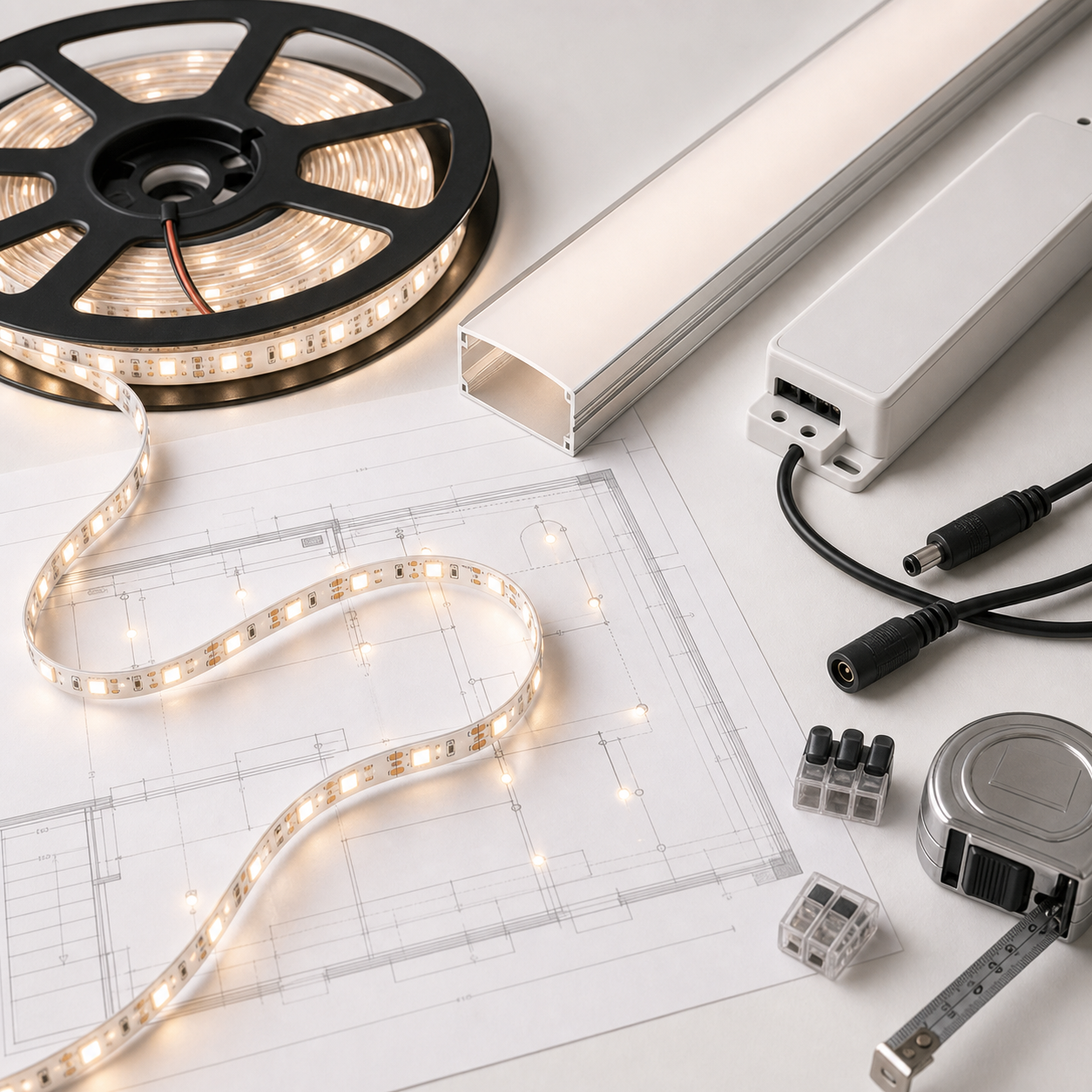
A waterproof driver can still fail if the wiring connection is not protected. Many outdoor lighting failures happen at cable joints, connectors, junction boxes, or incorrectly sealed entry points. Water can travel along cables, enter through weak glands, or collect inside a poorly placed enclosure.
Buyers and installers should review:
- Waterproof connectors and cable glands.
- Correct cable diameter for gland sealing.
- Junction box IP rating and installation position.
- Drainage and avoidance of standing water.
- UV-resistant cable where exposed to sunlight.
- Strain relief and protection from pulling or vibration.
- Whether connections are serviceable or permanently sealed.
For harsh environments, the full connection system should match the driver and fixture protection level. A high-IP driver connected through poor wiring will not deliver high reliability.
Material, Corrosion, and Coastal Environments
Harsh outdoor environments are not only wet. Coastal projects may expose drivers and fixtures to salt air. Industrial projects may expose them to dust, oil, chemical vapor, or vibration. Desert locations may combine heat, dust, and UV exposure. Cold regions may create freeze-thaw stress and condensation.
For these projects, buyers should ask about:
- Enclosure material and corrosion resistance.
- Potting compound or sealing method.
- Stainless steel or corrosion-resistant mounting hardware when needed.
- UV-resistant cables and housings.
- Salt-spray or corrosion test data when relevant.
- Whether the driver can be placed in a protected service box.
In coastal or industrial applications, the best driver is often the one that fits a complete protection strategy, not the one with the highest single rating on paper.
Dimming and Control Compatibility
Outdoor projects may need dimming, timers, sensors, photocells, DMX control, DALI, 0-10V, PWM, or smart control systems. This is common in facade lighting, hospitality landscapes, public parks, signage, outdoor restaurants, and commercial building exteriors.
Before ordering, buyers should confirm:
- Whether the driver supports the required dimming method.
- Minimum dimming level and dimming smoothness.
- Compatibility with sensors, timers, or controllers.
- Whether dimming wiring also needs waterproof protection.
- Flicker expectations for video, photography, or public spaces.
- Whether control equipment is rated for outdoor use.
Controls can improve energy use and user experience, but they add more components. Every component in an outdoor control system should be suitable for the environment.
Certification and Market Requirements
Certification requirements depend on the target market and application. A driver for a North American outdoor project may need different documentation from a driver for Europe, the Middle East, or Southeast Asia. Safety, EMC, labeling, installation instructions, and production consistency all matter.
The UL Solutions lighting safety testing and certification information is useful for buyers considering North American lighting safety expectations. For Europe-focused projects, Enton LED’s article on how LED lighting manufacturers can support the CE certification process explains why tested samples, labels, documentation, and production consistency should stay aligned.
Buyers should ask suppliers for certificates, test reports, model numbers, label artwork, installation manuals, and whether the driver used in production is the same as the one used for documentation.
Where Outdoor Waterproof Drivers Are Commonly Used
Outdoor waterproof LED drivers are used across many project types. The harshness of the environment determines how careful the specification must be.
- Landscape lighting: moisture, soil, insects, long cables, and maintenance access are important.
- Facade lighting: height, wind, rain, surge protection, and service planning matter.
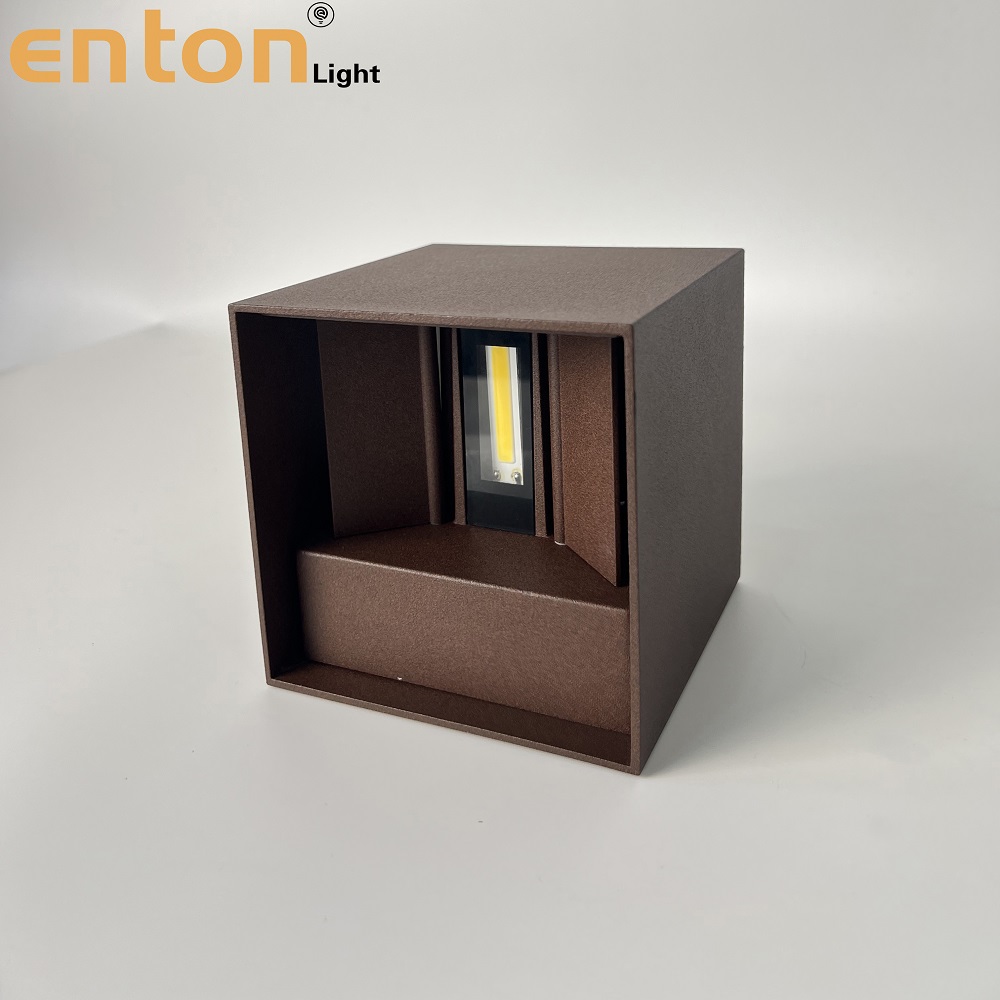
- Outdoor wall lighting: weather exposure, wiring entry, and wall box sealing are critical.
- Flood lighting: high wattage, heat, surge protection, and mounting exposure must be reviewed.
- Signage lighting: driver access, voltage drop, dimming, and long operating hours matter.
- Coastal projects: corrosion and salt air require extra attention.
- Industrial yards: dust, vibration, chemicals, and electrical stress may be present.
Enton LED supplies related outdoor wall lights, flood lights, and other outdoor lighting options for project buyers.
Common Mistakes When Buying Outdoor LED Drivers
Many driver failures start with procurement shortcuts. The buyer may choose the lowest price, the smallest size, or the highest IP label without checking the full installation.
Avoid these mistakes:
- Choosing a driver with no power headroom.
- Confusing constant voltage and constant current requirements.
- Assuming IP65, IP67, or IP68 solves every outdoor problem.
- Ignoring cable glands, connectors, and junction boxes.
- Placing the driver where water can collect.
- Ignoring temperature derating.
- Skipping surge protection review.
- Using long low-voltage cable runs without voltage drop calculation.
- Not confirming dimming or control compatibility.
- Accepting certificates without matching model numbers.
Enton LED’s article on hidden risks of importing low-cost LED lights explains why the cheapest option can become expensive when failures, documentation gaps, and after-sales pressure appear later.
Procurement Checklist for Outdoor Waterproof LED Drivers
Before approving a waterproof LED driver for harsh environments, buyers should confirm:
- Constant voltage or constant current requirement.
- Input voltage and output voltage/current range.
- Total load calculation and power headroom.
- IP rating and whether it matches the actual exposure.
- Operating temperature range and derating data.
- Surge protection, short-circuit protection, overload protection, and overtemperature protection.
- Cable length, voltage drop, wire gauge, and power injection needs.
- Waterproof connectors, glands, junction boxes, and drainage strategy.
- Dimming and control compatibility.
- Certification, test reports, labels, and target-market requirements.
- Warranty, replacement access, spare parts, and repeat order consistency.
- Packaging, installation instructions, inspection plan, and shipping schedule.
For larger projects, Enton LED’s article on lead times and shipping for bulk LED orders explains why samples, production, inspection, and logistics should be planned before installation deadlines.
How Enton LED Supports Outdoor Lighting Projects
Enton LED supplies outdoor lighting products for project and wholesale buyers, including outdoor lights, outdoor wall lights, flood lights, solar lighting products, and related LED lighting solutions. Buyers can browse the All Products page or contact the team through the Contact page for project discussions.
For harsh outdoor environments, Enton LED can help buyers discuss LED product type, driver compatibility, waterproof requirements, IP rating, CCT, control method, packaging, samples, inspection, shipping, and repeat order needs. For buyers managing multiple categories, Enton LED’s article on how a one-stop lighting manufacturer saves time and money explains why coordinated sourcing can reduce project complexity.
Conclusion
Choosing the right outdoor waterproof LED driver for harsh environments requires more than matching wattage. Buyers should confirm driver type, power margin, IP rating, temperature range, surge protection, voltage drop, waterproof wiring, corrosion risk, dimming compatibility, certification, and maintenance access.
The driver should be selected as part of the complete outdoor lighting system. When the driver, fixture, wiring, connectors, controls, and installation method are planned together, outdoor lighting becomes more reliable, easier to maintain, and better prepared for real environmental stress.
FAQs About Outdoor Waterproof LED Drivers
Is an IP67 LED driver always better than an IP65 driver?
Not always. IP67 may be better for more exposed conditions, but the correct choice depends on installation position, wiring, drainage, connectors, heat, and the manufacturer’s intended use. A well-installed IP65 driver in a protected location may outperform a poorly installed higher-rated driver.
How much power headroom should an outdoor LED driver have?
Many project buyers use about 20% to 30% headroom as a practical starting point, but the final margin should follow the driver manufacturer’s guidance, operating temperature, load type, and installation conditions.
Can indoor LED drivers be used outdoors inside a box?
Only if the complete enclosure, wiring, heat dissipation, and local electrical requirements make it suitable. In many harsh environments, a driver designed and rated for outdoor use is a safer and more reliable choice.
What causes outdoor LED drivers to fail?
Common causes include water ingress, poor cable sealing, overheating, power surges, overload, wrong driver type, voltage drop, corrosion, low-quality components, and improper installation.
Should outdoor LED drivers be centralized or distributed?
It depends on cable length, voltage drop, maintenance access, load grouping, control zones, and site conditions. Distributed drivers can reduce low-voltage cable runs, while centralized drivers may simplify access when designed correctly.