
Public spaces need lighting that does more than provide visibility. A hotel lobby, shopping mall, airport lounge, school corridor, library, restaurant entrance, office reception area, or civic building has to feel welcoming, safe, durable, and visually aligned with the design concept. The lighting is part of how people understand the space before they even notice the furniture or signage.
Two common choices for commercial interiors are pendant lights and surface mounted lights. Both can work beautifully, but they create very different aesthetic and practical results. Pendant lights hang into the space and often become part of the visual identity. Surface mounted lights stay closer to the ceiling and often create a cleaner, more controlled, and more operationally practical look. Buyers can compare Enton LED’s pendant light category, surface downlight category, and broader indoor lights range when planning public space projects.
Why the Pendant vs Surface Mounted Decision Matters
The difference between pendant lights and surface mounted lights is not only installation. It changes how people read the ceiling, how the space feels, how easy the lighting is to maintain, and how the project balances visual expression with operational reliability.
In public spaces, the right choice can affect:
- First impression and brand identity.
- Ceiling height perception and spatial scale.
- Visual comfort and glare control.
- Maintenance access and cleaning workload.
- Safety, durability, and public contact risk.
- Lighting uniformity across circulation areas.
- Budget, installation complexity, and long-term replacement planning.
For designers, pendant lights and surface mounted lights are two different languages. Pendant lights speak through form, suspension, rhythm, and decorative presence. Surface mounted lights speak through restraint, consistency, ceiling order, and practical performance.
What Are Pendant Lights?
Pendant lights are suspended from the ceiling using cables, rods, stems, or other hanging structures. They can be decorative, architectural, linear, cylindrical, circular, or custom-shaped. In public spaces, pendant lights often become visible design objects rather than background fixtures.
Pendant lights are commonly used in:
- Hotel lobbies and lounge areas.
- Restaurants, cafes, bars, and hospitality counters.
- Office reception areas and collaboration zones.
- Retail feature zones and boutique interiors.
- Libraries, reading areas, and community spaces.
- Showrooms, galleries, and brand experience areas.
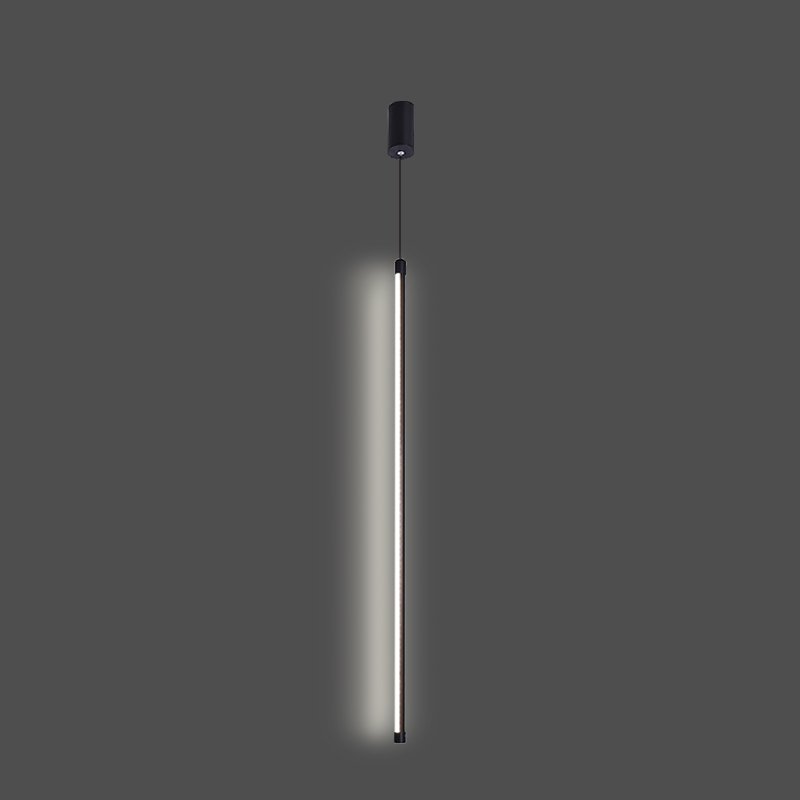
Modern linear pendants, such as Enton LED’s Modern Linear Pendant Light #P-XKF-80025, can provide a cleaner architectural look than traditional decorative pendants while still giving the ceiling a visible design feature.
What Are Surface Mounted Lights?
Surface mounted lights are installed directly on the ceiling surface rather than hanging down into the room or being fully recessed. They may include surface downlights, surface mounted spotlights, ceiling lights, and other compact fixtures. They are useful where recessed installation is not possible, where the ceiling is concrete, or where the project needs a simple and robust lighting system.
Surface mounted lights are commonly used in:
- Corridors and circulation paths.
- Schools, hospitals, libraries, and public service areas.
- Commercial offices and coworking spaces.
- Retail back areas and public walkways.
- Low to medium ceiling spaces.
- Renovation projects where ceiling cutting is limited.
- Spaces requiring easier maintenance and fixture replacement.
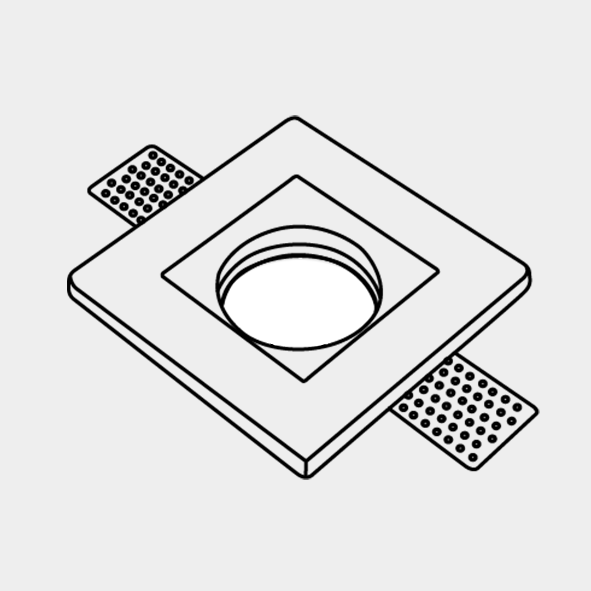
Products such as Enton LED’s Surface Mounted Downlight Fixture #ETI1111 can support public spaces where clean ceiling installation, controlled output, and practical maintenance matter more than decorative suspension.
Aesthetic Difference: Visual Object vs Ceiling Integration
The most obvious difference is visual presence. Pendant lights are seen as objects. They can create a focal point, define a zone, add rhythm, and communicate the design personality of the space. This is why they are often used above reception desks, seating clusters, restaurant tables, bar counters, and lounge areas.
Surface mounted lights are usually more integrated. They can still look refined, but their role is often to support the space rather than become the visual center. They are useful when the designer wants the ceiling to stay clean, organized, and functional.
If the public space needs a memorable feature, pendant lights may be the stronger choice. If the space needs calm, repeatable, durable lighting across a large area, surface mounted lights may be better.
Ceiling Height and Scale Are Critical
Pendant lights need enough vertical space. In a tall lobby, atrium, restaurant, or lounge, pendants can fill empty volume and make the space feel warmer. In a low corridor or compact public room, pendants may feel crowded, create head-clearance concerns, or interfere with signage, sprinklers, cameras, and airflow.
Surface mounted lights are usually safer for lower ceilings because they stay close to the ceiling plane. They are also useful where public movement is dense and the lighting should not create physical obstruction.
For large public interiors, designers should consider:
- Ceiling height and suspension length.
- Human clearance and accessibility routes.
- Views from entrances, stairs, escalators, and upper floors.
- Coordination with HVAC, sprinklers, cameras, signage, and acoustic elements.
- How the fixture scale looks from both close and far distances.
A pendant that looks beautiful in a product photo may feel too small in an airport lounge or too large in a school corridor. Scale must be checked against the real space.
Public Space Safety and Durability
Public spaces receive more traffic than private interiors. People may carry luggage, equipment, shopping bags, food trays, carts, or cleaning tools. Fixtures may be exposed to dust, impact risk, vibration, cleaning schedules, and long operating hours.
Surface mounted lights often have an operational advantage because they are compact and close to the ceiling. They are less likely to be touched, bumped, or visually damaged by hanging hardware. Pendant lights can still work well, but their suspension system, shade material, mounting strength, and maintenance access need careful review.
For high-traffic zones, buyers should ask:
- Is the fixture exposed to impact or public contact?
- Can cleaning teams access it safely?
- Will suspension cables collect dust or be difficult to maintain?
- Does the fixture need a stronger mounting structure?
- Will replacement parts be available for future maintenance?
In some projects, a mixed strategy is best: pendants in controlled feature areas, surface mounted lights in circulation and high-traffic zones.
Lighting Effect: Atmosphere vs Uniformity
Pendant lights are excellent for atmosphere. They can lower the perceived lighting plane, make a large public space feel more intimate, and create a clear zone within an open interior. In restaurants, hotel lobbies, lounges, libraries, and reception areas, this can be a major design advantage.
Surface mounted lights are often better for consistent illumination. Corridors, waiting areas, public service counters, classrooms, clinics, and commercial circulation spaces usually need reliable visibility and predictable spacing. Surface mounted fixtures can provide this without adding visual clutter.
The best projects often combine both. Pendant lights create identity and focus, while surface mounted lights provide the background illumination that keeps the space functional.
Glare Control and Visual Comfort
Public spaces should feel comfortable for many different users: visitors, staff, children, elderly people, customers, hotel guests, office workers, and maintenance teams. Poor glare control can make a public space feel cheap or tiring, even if the design looks good in photos.
Pendant lights can create glare if the light source is exposed at eye level or reflected from polished tables, glass walls, glossy floors, or reception counters. Surface mounted lights can create glare if the lens is too bright, the fixture is shallow, or the spacing is too aggressive.
The WELL electric light glare control feature emphasizes minimizing direct and overhead glare. For public spaces, this principle matters because visitors experience the lighting from many viewing angles, not just one workstation position.
Enton LED’s article on glare control in surface downlights explains related principles such as shielding, diffuser quality, beam control, and layout planning.
Color Quality and Material Appearance
Public spaces often use materials that depend on good lighting: stone, wood, fabric, metal, painted walls, signage, plants, artwork, food, retail displays, and branded finishes. The difference between pendant and surface mounted lights is important, but color quality is also critical.
High CRI lighting can help materials look more natural and premium. This is especially useful in hotel lobbies, retail spaces, restaurants, galleries, showrooms, and public reception areas. Enton LED’s article on high CRI lighting in retail, hospitality, and office environments explains why color rendering affects customer perception and interior quality.
CCT should also match the atmosphere. Warm white may fit hospitality and lounge spaces, while neutral white may fit offices, libraries, galleries, and civic interiors. A public space lighting plan should avoid random color temperatures across different fixture families.
Controls and Scene Flexibility
Public spaces change throughout the day. A lobby may need bright morning circulation, softer evening atmosphere, cleaning mode, event mode, and emergency-related lighting coordination. Restaurants and hotels may need scene control. Retail spaces may need different lighting for daytime, evening, and promotions.
The U.S. Department of Energy lighting controls overview explains common methods such as dimmers, timers, sensors, and photosensors. For public spaces, controls help pendant lights and surface mounted lights support different operating conditions without changing fixtures.
Buyers should confirm dimming compatibility, driver type, flicker expectations, control protocol, and whether pendant and surface mounted fixtures can be controlled in separate groups. A decorative pendant zone may need a different scene than the general circulation lighting.
When Pendant Lights Are the Better Choice
Pendant lights are often the better choice when the project needs visual character, emotional warmth, or a clear focal point. They work especially well where people pause, gather, sit, check in, order, meet, or experience the brand.
Choose pendant lights when:
- The ceiling is high enough for safe suspension.
- The design needs a visible decorative or architectural element.
- The space needs a warmer and more human scale.
- The fixture can help define a seating, reception, dining, or lounge zone.
- The project wants a memorable first impression.
- Maintenance access and cleaning are manageable.
For modern commercial projects, linear pendant lights can also support a clean architectural style. Enton LED’s article on why linear LED lighting is becoming standard for modern commercial projects explains why linear forms are often chosen for offices, retail, and hospitality interiors.
When Surface Mounted Lights Are the Better Choice
Surface mounted lights are often the better choice when the project needs practical, durable, and repeatable lighting. They are useful when the ceiling cannot be recessed, when the public traffic is heavy, or when the design should remain visually quiet.
Choose surface mounted lights when:
- The ceiling is low or medium height.
- Recessed installation is not practical.
- The space needs regular fixture spacing and uniform light.
- Public circulation and safety clearance are important.
- The project needs easy maintenance and replacement.
- The design concept favors a clean ceiling rather than hanging elements.
- Budget and installation speed are major concerns.
Surface mounted lights may be especially useful in corridors, schools, offices, public service areas, transport interiors, and renovation projects where ceiling conditions are difficult.
Public Space Examples
Different public spaces may need different combinations of pendant and surface mounted lighting.
- Hotel lobby: pendant lights can create a premium focal point, while surface mounted lights support circulation and reception task lighting.
- Shopping mall corridor: surface mounted lights may provide consistent general lighting, while pendants can mark lounge or promotional zones.
- Restaurant entrance: pendant lights can create mood and identity, while surface mounted fixtures can support queue and service areas.
- Library reading zone: pendants can define reading tables, while surface mounted lights can support aisles and stacks.
- Office reception: pendants can help brand the welcome area, while surface mounted downlights or ceiling lights can provide functional background light.
- School corridor: surface mounted lights are usually more practical because durability, clearance, and easy maintenance matter.
The key is not to choose one fixture type for every public space. The best result comes from matching the fixture role to the user behavior and design intent.
Cost, Lead Time, and Maintenance
Pendant lights can cost more to install when suspension length, ceiling reinforcement, custom finishes, or decorative details are involved. Surface mounted lights may be faster to install, especially in large repeatable areas. However, cost depends on product quality, driver specification, controls, finish, packaging, and project scale.
Maintenance should be considered early. Pendant lights may require more cleaning because they hang into the occupied space. Surface mounted lights may be easier to access in some ceilings but still need proper driver access and replacement planning. For public buildings, maintenance teams often prefer products with clear model numbers, stable repeat supply, and accessible spare parts.
Enton LED’s article on lead times and shipping for bulk LED orders explains why samples, production, inspection, packaging, and logistics should be planned before installation deadlines.
Procurement Checklist for Public Space Lighting
Before choosing pendant lights or surface mounted lights for a public space, buyers should confirm the following details:
- Space type, user behavior, and design intent.
- Ceiling height, structure, and installation method.
- Fixture scale, shape, finish, and visual match with the interior.
- Lumen output, wattage, beam angle, and spacing.
- Glare control, diffuser quality, and visual comfort.
- CCT, CRI, color consistency, and material appearance.
- Dimming, driver type, controls, and scene requirements.
- Cleaning access, maintenance method, and spare parts.
- Certificates, test reports, labels, and market requirements.
- Packaging, model numbering, bulk order schedule, and repeat order support.
For supplier evaluation, Enton LED’s guide on red flags when choosing a commercial lighting supplier can help buyers check communication quality, documentation, samples, production control, and after-sales support.
How Enton LED Supports Public Space Lighting Projects
Enton LED supplies commercial lighting products for public spaces, hospitality interiors, offices, retail environments, and project buyers. Depending on the design intent, buyers can compare pendant lights, surface downlights, ceiling lights, track lights, recessed downlights, and other indoor lighting options.
For public space projects, Enton LED can help buyers discuss fixture style, size, finish, CCT, CRI, beam angle, glare control, dimming, packaging, sample approval, production schedule, and repeat order requirements. For buyers managing several fixture categories, Enton LED’s article on how a one-stop lighting manufacturer saves time and money explains why coordinated sourcing can reduce project complexity.
Conclusion
Pendant lights and surface mounted lights can both be excellent choices for public spaces, but they solve different design problems. Pendant lights create visual identity, atmosphere, and human scale. Surface mounted lights provide clean ceiling integration, practical durability, uniformity, and easier use in lower or more demanding spaces.
The right decision depends on ceiling height, public traffic, design intent, maintenance, glare control, controls, color quality, installation conditions, and long-term supplier support. In many public space projects, the strongest result comes from combining both: pendant lights where the space needs presence, and surface mounted lights where the space needs reliable, quiet performance.
FAQs About Pendant Lights vs Surface Mounted Lights
Are pendant lights suitable for public spaces?
Yes, pendant lights are suitable for public spaces when ceiling height, suspension safety, maintenance access, glare control, and scale are properly planned. They work especially well in lobbies, lounges, restaurants, reception areas, and feature zones.
When should I choose surface mounted lights instead of pendant lights?
Choose surface mounted lights when the ceiling is lower, public traffic is heavy, installation needs to be simple, or the design requires a clean and practical ceiling solution.
Can pendant lights and surface mounted lights be used together?
Yes. Many public spaces use pendant lights for visual focus and surface mounted lights for general illumination, circulation, corridors, and functional areas.
Which option is easier to maintain?
Surface mounted lights are often easier to maintain in large repeatable areas because they stay close to the ceiling and usually have simpler installation. Pendant lights may require more cleaning and access planning, especially in high-ceiling spaces.
What specification matters most for public space lighting?
Important specifications include lumen output, beam angle, glare control, CCT, CRI, dimming compatibility, fixture finish, installation method, safety documentation, maintenance access, and repeat order support.