
Modern commercial architecture is moving toward cleaner lines, quieter materials, and lighting that supports the space without overwhelming it. In hotels, offices, retail stores, galleries, restaurants, and public interiors, designers often want fixtures that feel intentional but not decorative in a heavy way. This is one reason minimalist indoor wall lights are becoming more popular.
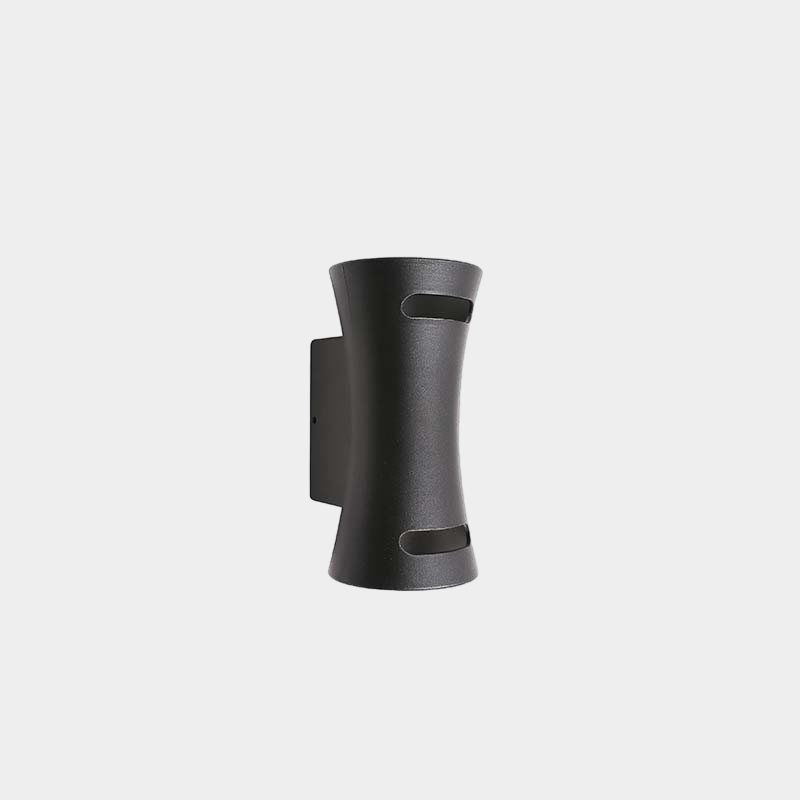
Wall lights used to be treated as secondary fixtures or purely decorative sconces. Today, minimalist wall lights can help define circulation, soften vertical surfaces, add visual rhythm, improve wayfinding, and support layered lighting design. For project buyers comparing fixture options, Enton LED’s indoor wall light category and related products such as Wall Light #ETI0308, Indoor Wall Lamp #ETI0307-2, and Warm White Metal Wall Light #ETI0305 are useful starting points.
Why Minimalist Wall Lights Are Rising in Commercial Design
Commercial interiors are becoming more restrained. Instead of using many decorative elements, designers often rely on proportion, texture, material quality, lighting layers, and small architectural details. Minimalist indoor wall lights fit this direction because they can be visible enough to shape the space but quiet enough to avoid visual noise.
The rise of minimalist wall lights is driven by several trends:
- More demand for clean architectural interiors.
- Greater focus on hospitality-like office and retail experiences.
- More use of vertical lighting for walls, corridors, and feature surfaces.
- Need for flexible mood lighting in hotels, restaurants, and lounges.
- Preference for durable fixtures that are easy to coordinate across multiple sites.
- Growth of LED technology, allowing slimmer forms and better optical control.
In short, wall lights are no longer only decorative. They are part of the architectural lighting strategy.
What Makes an Indoor Wall Light Minimalist?
A minimalist indoor wall light is not simply a small fixture. It usually has a disciplined form, simple finish, controlled light effect, and clear relationship with the wall surface. The fixture should look like it belongs to the architecture rather than being added after the design is complete.
Common minimalist wall light characteristics include:
- Simple geometric shapes such as cylinders, rectangles, discs, or slim bars.
- Neutral finishes such as white, black, brushed metal, champagne, or matte gray.
- Compact size and clean mounting detail.
- Up-and-down light distribution or soft wall grazing.
- Hidden or controlled light source to reduce glare.
- Consistent product family design across several wattages or sizes.
The goal is visual restraint. The fixture should add value through proportion, light quality, and placement, not through excessive ornament.
Wall Lights Add Vertical Illumination
Many commercial lighting plans focus too much on horizontal light levels: how bright the floor, desk, or table is. But people also experience spaces through vertical surfaces. Walls, columns, artwork, signage, textures, and corridor edges shape the feeling of the interior.
Minimalist wall lights help bring light to these vertical surfaces. This can make a corridor feel more comfortable, a hotel lobby feel warmer, a restaurant feel more intimate, or an office reception area feel more polished. Vertical light can also make a space feel brighter without simply increasing ceiling light output.
This is especially important in modern architecture, where walls are often large, clean, and material-driven. A carefully placed wall light can reveal stone texture, wood panels, plaster surfaces, or brand graphics without adding bulky decorative fixtures.
They Support Layered Lighting Design
Modern commercial interiors rarely depend on only one light source. A strong design usually combines ambient lighting, accent lighting, task lighting, decorative lighting, and wayfinding light. Minimalist wall lights are useful because they can sit between decorative and functional roles.
They may be used to:
- Guide people along corridors and circulation paths.
- Frame a reception area or elevator lobby.
- Add warmth to a hotel room corridor or lounge wall.
- Provide soft vertical light near seating areas.
- Highlight wall textures, niches, columns, or signage.
- Reduce the need for overly bright ceiling fixtures.
For related thinking about layered commercial lighting, Enton LED’s article on pendant lights vs. surface mounted lights in public spaces explains how fixture form affects the visual language of shared interiors.
Where Minimalist Indoor Wall Lights Work Best
Indoor wall lights are not suitable for every surface, but they can be very effective in the right commercial zones. Their strongest value appears where people move, pause, wait, or experience a material wall at close range.
Common applications include:
- Hotel corridors: create rhythm, comfort, and a premium hospitality feeling.
- Office reception areas: add warmth and brand polish without cluttering the ceiling.
- Restaurants and bars: support intimate atmosphere and wall texture.
- Retail stores: add soft accent light near feature walls, fitting areas, and brand displays.
- Galleries and showrooms: provide controlled visual emphasis without heavy decorative forms.
- Apartment lobbies and public corridors: improve wayfinding and perceived quality.
- Stair halls and transition zones: support safety while maintaining a clean design language.
In high-end projects, wall lights often work best when paired with recessed downlights, track lights, pendant lights, or linear lighting rather than used alone.
Minimalism Does Not Mean Low Performance
A common mistake is assuming minimalist fixtures are mainly about appearance. In commercial architecture, performance still matters. A clean wall light must also provide the right lumen output, beam control, CCT, CRI, driver quality, thermal design, and maintenance reliability.
Buyers should check:
- Actual lumen output and wattage.
- Light distribution, such as up/down, direct, indirect, or diffused.
- Beam angle or wall pattern.
- Glare control and whether the LED source is directly visible.
- CCT options for the commercial environment.
- CRI and color consistency for material-rich interiors.
- Driver quality, dimming compatibility, and flicker expectations.
- Installation structure, wiring method, and maintenance access.
The best minimalist wall light is not the thinnest product. It is the product that looks simple while still solving the lighting task properly.
Color Temperature Shapes the Architecture
CCT is especially important for wall lights because they often illuminate vertical surfaces at close range. A warm CCT can make wood, stone, fabric, and hospitality walls feel comfortable. A neutral CCT can support offices, galleries, and modern retail interiors. A very cool CCT may feel clean in some technical spaces but can feel harsh in hospitality or luxury projects.
Typical commercial choices may include:
- 2700K or 3000K for hospitality, restaurants, lounges, and warm premium interiors.
- 3000K or 3500K for offices, reception areas, retail, and mixed-use commercial spaces.
- 4000K for cleaner functional areas when a more neutral tone is required.
The right choice depends on the material palette, brand identity, daylight, and the atmosphere the architect wants to create.
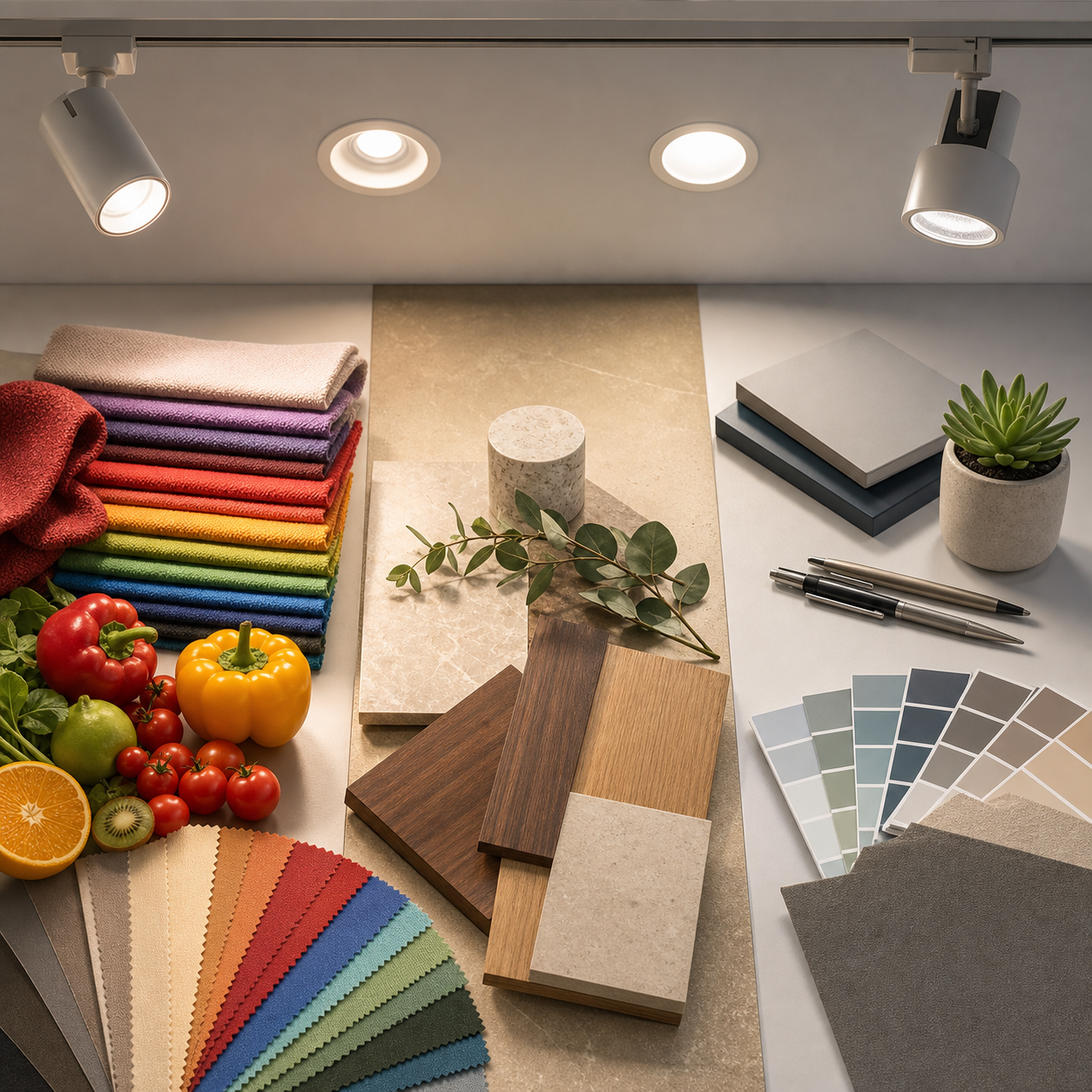
High CRI Helps Materials Look Premium
Minimalist architecture often depends on subtle material differences. Wood grain, stone texture, brushed metal, plaster, fabric, leather, and painted surfaces can look flat under poor color rendering. This is why high CRI is often worth considering for commercial wall lights in premium interiors.
CRI 90+ may be useful in hotels, restaurants, galleries, showrooms, retail stores, and client-facing office interiors. Color consistency is also important because wall lights are often repeated along a corridor or wall. A small color difference between fixtures can become obvious when they are installed in a regular rhythm.
Enton LED’s article on high CRI lighting in retail, hospitality, and office environments explains why color rendering affects material appearance and commercial perception.
Glare Control Is Essential
Wall lights are often mounted close to eye level compared with ceiling fixtures. If the light source is too exposed, the fixture can create discomfort for people walking down corridors, sitting in lounges, or looking across a lobby. Minimalist design should never come at the cost of visual comfort.
Glare control can be improved through diffusers, deep optical structures, baffles, indirect distribution, shielded LEDs, and careful mounting height. For up-and-down wall lights, the beam pattern should be reviewed on the actual wall material because glossy or very light surfaces can increase perceived brightness.
The WELL electric light glare control feature highlights the importance of reducing direct and overhead glare. Even when a project is not pursuing certification, this is a useful principle for commercial interiors where comfort and perceived quality matter.
Enton LED’s article on glare control in surface downlights also explains how optical design and fixture placement can affect occupant comfort.
Controls Make Wall Lights More Useful
Minimalist wall lights can become more valuable when they are connected to dimming or scene control. A hotel corridor may need a brighter cleaning mode and a softer evening mode. A restaurant may need different scenes for lunch and dinner. A lobby may need daytime, evening, and event scenes.
The U.S. Department of Energy lighting controls overview explains common control methods such as dimmers, timers, sensors, and photosensors. In commercial architecture, controls help the same wall light support different moods and operating needs.
Buyers should confirm driver type, dimming method, minimum dimming level, flicker expectations, and compatibility with the selected control system before placing bulk orders.
Fixture Placement and Spacing
The beauty of minimalist wall lights often depends on placement. If spacing is irregular, mounting height is inconsistent, or the fixture does not align with architectural elements, the result can look careless. A simple fixture reveals layout mistakes more clearly than an ornate one.
Designers should coordinate wall lights with:
- Door heights and corridor rhythm.
- Wall panels, stone joints, wood grooves, and column spacing.
- Artwork, signage, mirrors, and room numbers.
- Furniture height and seating positions.
- Switches, sensors, emergency devices, and access panels.
- Camera views and public safety requirements.
For corridors and repeated public areas, wall light spacing should be tested with mockups or realistic renderings. The fixture should create rhythm without making the wall feel too busy.
Minimalist Wall Lights vs Ceiling-Only Lighting
Ceiling-only lighting can make a commercial space functional, but it may not always create depth or atmosphere. Wall lights add another visual layer. They can make large walls feel less flat, reduce the need for excessive ceiling brightness, and give people a more comfortable sense of orientation.
For example, a hotel corridor lit only by downlights may feel repetitive and flat. Adding minimalist wall lights can create rhythm and warmth. An office reception area lit only by ceiling panels may feel too utilitarian. Wall lights can add a more architectural and hospitality-inspired touch.
This does not mean wall lights should replace ceiling lighting everywhere. They work best as part of a complete lighting plan that may also include downlights, linear fixtures, pendant lights, or track lighting.
How Minimalist Wall Lights Support Brand Identity
Commercial architecture often has to communicate brand identity without excessive decoration. Minimalist wall lights can help because they are visible design elements that repeat across the space. A slim black wall light can feel modern and graphic. A warm metal finish can feel premium and hospitality-oriented. A white geometric fixture can blend into a clean architectural wall.
For multi-location brands, consistent wall light selection can also support brand recognition. Hotels, retail chains, office projects, and residential developers may choose a wall light family that can be used across corridors, lobbies, lounges, and public areas.
For brands that want more control over fixture appearance, Enton LED’s article on custom design modifications for lighting brands explains how finish, size, optics, accessories, and packaging can become part of a stronger market position.
Procurement Checklist for Indoor Wall Lights
Before approving minimalist indoor wall lights for a commercial project, buyers should confirm:
- Application area: corridor, lobby, restaurant, office, retail, gallery, or hotel room.
- Fixture size, shape, finish, and mounting detail.
- Light distribution: up, down, up/down, diffused, direct, or indirect.
- Lumen output, wattage, efficacy, and beam pattern.
- CCT, CRI, color consistency, and material rendering requirements.
- Glare control and visible LED source protection.
- Dimming compatibility and control requirements.
- Installation method, wiring access, and wall box compatibility.
- Thermal design, warranty, certificates, and test reports.
- Packaging, labels, spare parts, and repeat order consistency.
For large projects, Enton LED’s article on lead times and shipping for bulk LED orders explains why samples, production, inspection, packaging, and logistics should be planned before installation deadlines.
How Enton LED Supports Indoor Wall Light Projects
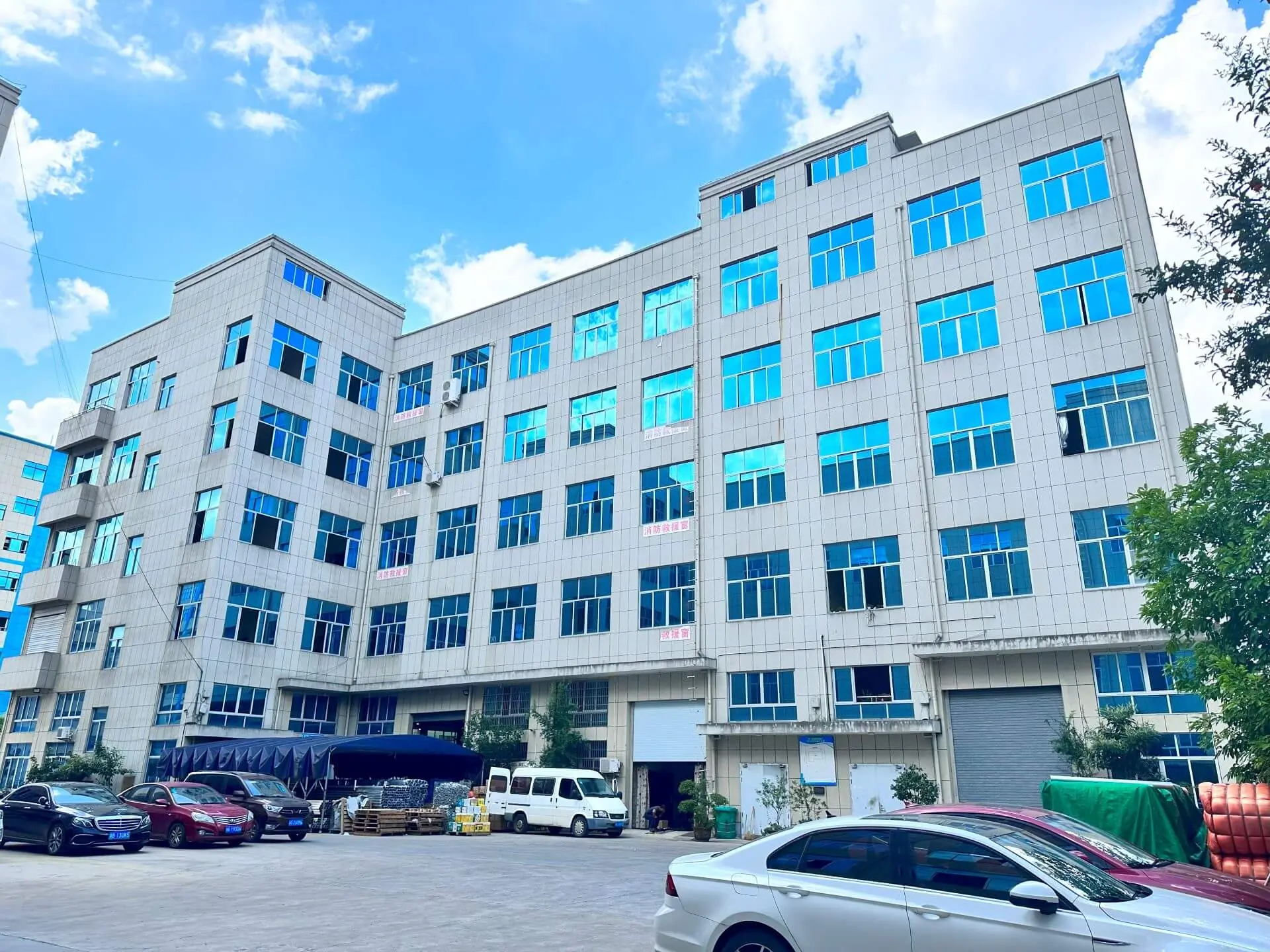
Enton LED supplies indoor lighting products for commercial interiors, including indoor wall lights, pendant lights, downlights, ceiling lights, track lights, and related architectural lighting products. Buyers can browse the All Products page for broader project options.
For minimalist commercial architecture, Enton LED can help buyers discuss wall light style, finish, CCT, CRI, beam direction, glare control, dimming, sample approval, packaging, production schedule, and repeat order requirements. For buyers managing several fixture categories, Enton LED’s guide on how a one-stop lighting manufacturer saves time and money explains how coordinated sourcing can reduce project complexity.
Conclusion
Minimalist indoor wall lights are rising in modern commercial architecture because they match the way many interiors are being designed today: cleaner, warmer, more material-focused, and more dependent on layered lighting. They add vertical illumination, rhythm, wayfinding, atmosphere, and brand identity without making the space feel crowded.
The best results come from treating wall lights as architectural tools rather than small decorative extras. Buyers should review fixture form, light distribution, mounting height, CCT, CRI, glare control, dimming, installation details, maintenance, and supplier support together. When those details are aligned, minimalist wall lights can make commercial interiors feel calmer, more premium, and more intentionally designed.
FAQs About Minimalist Indoor Wall Lights
Where are minimalist indoor wall lights most commonly used?
They are commonly used in hotel corridors, lobbies, office reception areas, restaurants, lounges, retail stores, galleries, stair halls, and public circulation zones.
Are wall lights enough for commercial interior lighting?
Usually no. Wall lights work best as part of a layered lighting plan with ceiling lights, downlights, pendant lights, track lights, or linear fixtures depending on the space.
What CCT is best for indoor wall lights?
Warm white such as 2700K or 3000K is often used in hospitality and restaurants, while 3000K to 3500K may fit offices, retail, galleries, and mixed commercial interiors. The final choice depends on materials and design intent.
Why is glare control important for wall lights?
Wall lights are often closer to eye level than ceiling fixtures. Poor optical design can create uncomfortable brightness, especially in corridors, lounges, and public areas where people view fixtures from many angles.
Can indoor wall lights be customized for commercial brands?
Yes. Finish, size, beam direction, CCT, CRI, packaging, labels, and product family planning can often be customized, but buyers should confirm how each change affects lead time, testing, cost, and repeat orders.