
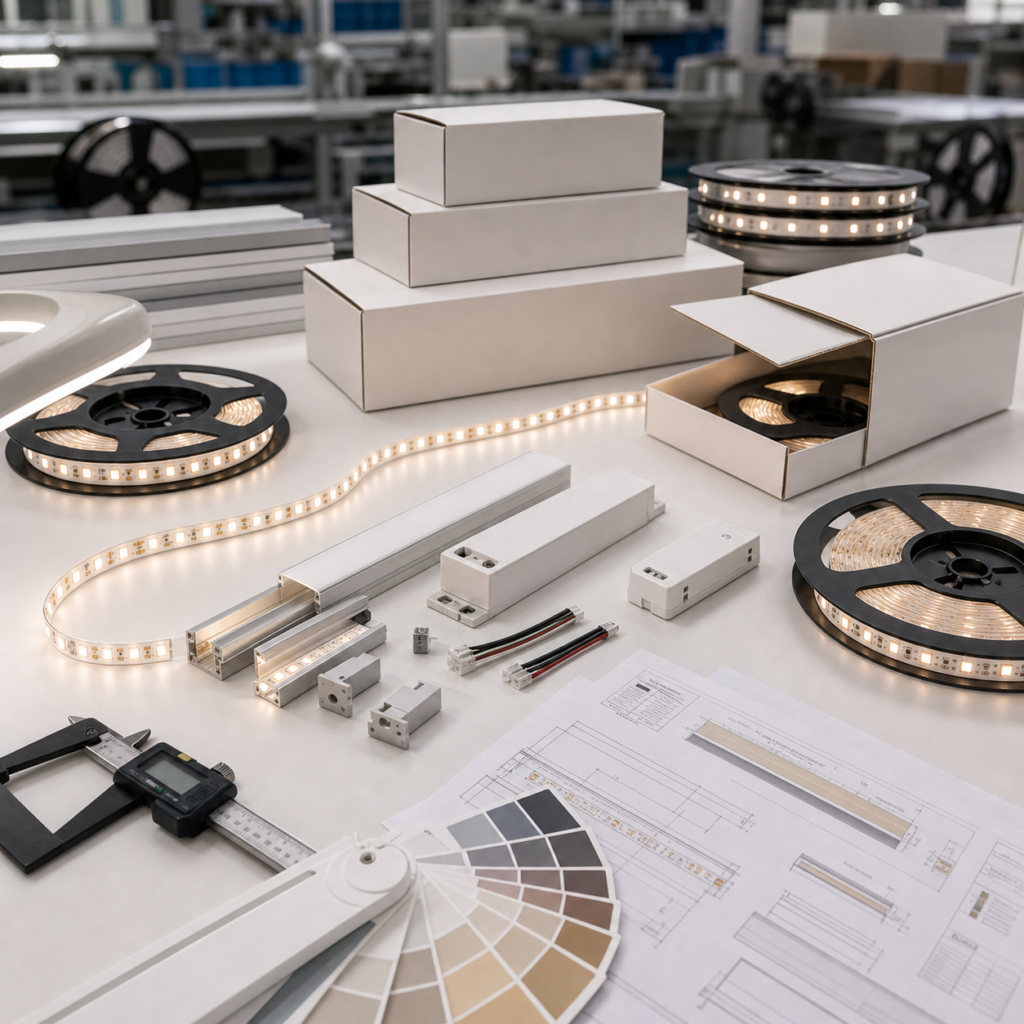
For lighting brands, distributors, and project suppliers, growth is not only about finding more customers. It is also about controlling product cost, shortening development time, keeping quality consistent, and launching new SKUs before competitors do. This is where LED strip OEM/ODM manufacturing becomes a practical growth tool.
OEM and ODM cooperation allows brands to work with an experienced lighting manufacturer instead of building every product, mold, driver solution, packaging system, and quality process from zero. For LED strip lights, this can be especially valuable because the product looks simple from the outside, but the real performance depends on PCB design, LED selection, color consistency, driver matching, thermal control, waterproofing, packaging, and batch testing.
This article explains how LED strip OEM/ODM manufacturing helps brands reduce cost, accelerate growth, and build a more scalable lighting product line. If you are comparing LED strip products for projects, you may also find Enton Light’s guide on how to select LED strip lights for large-scale engineering projects useful.
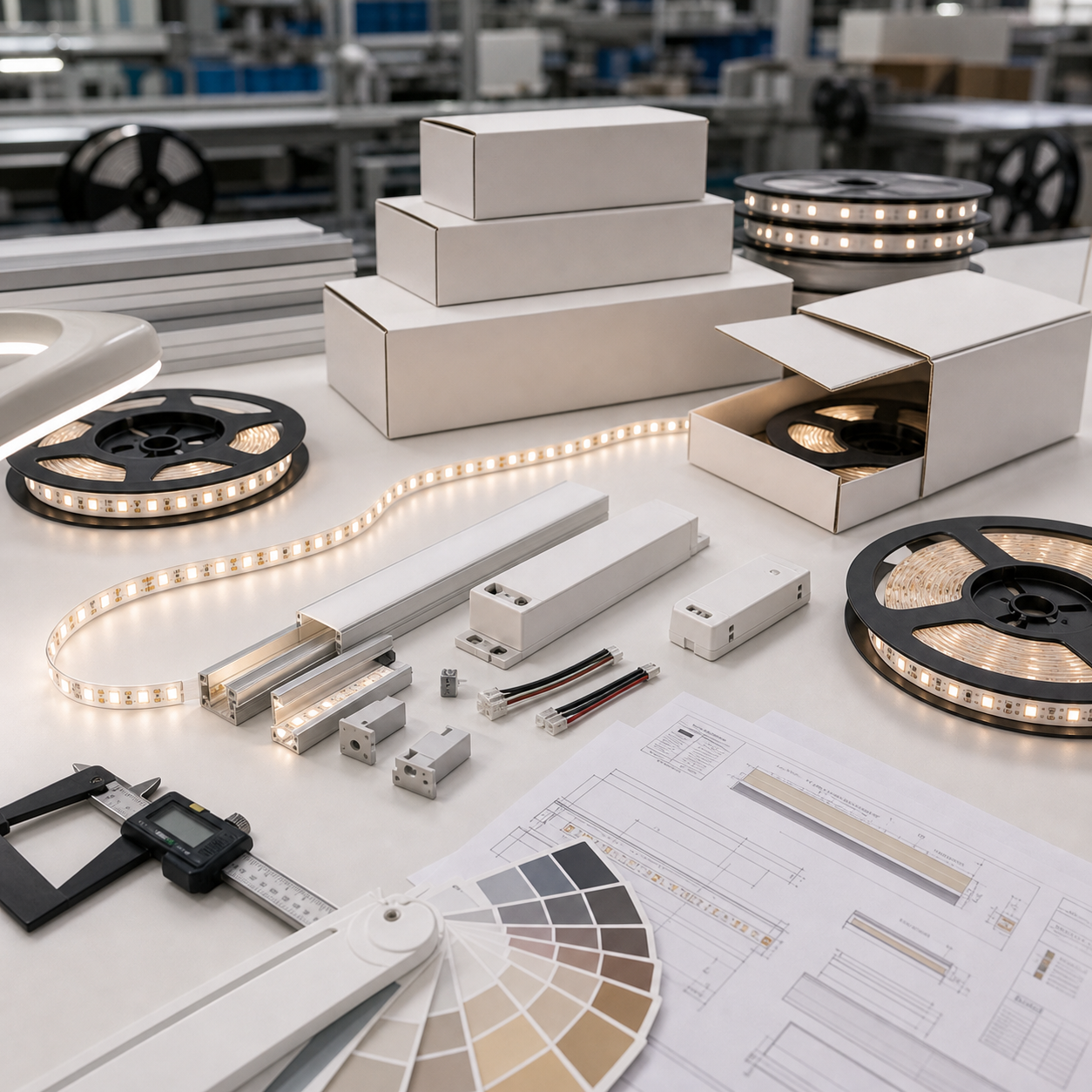
What OEM and ODM Mean in LED Strip Manufacturing
OEM means Original Equipment Manufacturing. In a typical OEM model, the buyer has a product requirement, brand, packaging idea, specification, or design direction, and the manufacturer produces the product under that brand. The buyer may provide drawings, target performance, packaging artwork, or market requirements.
ODM means Original Design Manufacturing. In an ODM model, the manufacturer already has product designs, engineering experience, tested structures, or platform solutions. The buyer can select from those solutions, customize details, and launch under its own brand faster. ODM is often useful when a brand wants to enter a product category quickly without building a full R&D team first.
For LED strip lights, OEM and ODM can cover many items:
- LED strip type, such as SMD, COB, RGB, RGBW, CCT tunable, or waterproof strip.
- Voltage, wattage per meter, LED density, color temperature, CRI, and lumen output.
- PCB width, copper thickness, adhesive, cutting interval, and connector method.
- Driver, controller, dimming, and accessories.
- Aluminum profiles, diffusers, clips, end caps, and installation kits.
- Private-label packaging, user manuals, barcodes, and product documentation.
Why LED Strip Products Are Ideal for OEM/ODM Cooperation
LED strip lights are flexible products. The same basic category can serve home decoration, retail shelves, hotel coves, signage, commercial ceilings, outdoor facades, cabinets, stairs, and engineering projects. This flexibility creates many market opportunities, but it also creates specification complexity.
A brand may need 24V COB strips for premium dot-free lighting, SMD RGBW strips for decorative projects, IP67 strips for outdoor signage, or high CRI strips for retail displays. Developing all of these from scratch is slow and expensive. An OEM/ODM partner can help the brand use existing engineering knowledge, tested materials, and production process experience.
For technical buyers comparing strip types, Enton Light’s COB vs SMD LED strips comparison explains how different technologies affect dot-free appearance, cost, heat, controls, and sourcing.
1. Lower Product Development Cost
New product development can be expensive. A brand must study the market, test LED chips, design the PCB, choose adhesives, check drivers, build samples, create packaging, run aging tests, and solve installation details. If the team has limited LED experience, this process may involve many mistakes before the product is stable.
OEM/ODM manufacturing reduces this cost because the manufacturer already has production experience, supplier resources, testing methods, and existing product platforms. The brand can start from a proven base and customize only the details that matter for its market.
This does not mean a brand loses control. A good OEM/ODM process can still define the target price, lumen output, CCT, CRI, IP rating, packaging, accessories, and warranty requirement. The difference is that the brand is not paying to rediscover every technical lesson by itself.
2. Faster Time to Market
Speed matters in LED lighting. Trends change quickly: COB strips, neon flex, RGBW effects, smart control, high CRI retail lighting, low-voltage architectural lines, and outdoor waterproof strip systems all move through the market fast. If a brand takes too long to launch, competitors may already capture the demand.
ODM manufacturing can shorten launch time because the manufacturer already has mature product options. OEM cooperation can also move faster when the factory has stable supply chains and clear engineering feedback. Instead of building the whole system from zero, the brand can move through sampling, testing, packaging, and production much quicker.
Faster launch also helps brands test the market. A company can introduce a new LED strip series, collect customer feedback, and adjust the next batch without committing to a huge internal development structure.
3. Better Control Over Component Sourcing
LED strip cost is strongly affected by components. LED chips, PCB copper, resistors, adhesive tape, silicone sleeve, connectors, drivers, packaging, and aluminum profiles all affect both price and reliability. A low-cost strip can become expensive if it creates color mismatch, voltage drop, heat problems, or after-sales claims.
An experienced OEM/ODM manufacturer can help brands balance cost and performance. For example, the manufacturer can suggest when to use a higher copper PCB, when a premium adhesive is worth the cost, when a standard connector is enough, and when a factory-sealed waterproof length is safer than field cutting.
For complete project planning, buyers should also check driver and control compatibility. Enton Light’s article on large-scale LED strip selection covers voltage, wattage, driver load, IP rating, and installation planning in more detail.
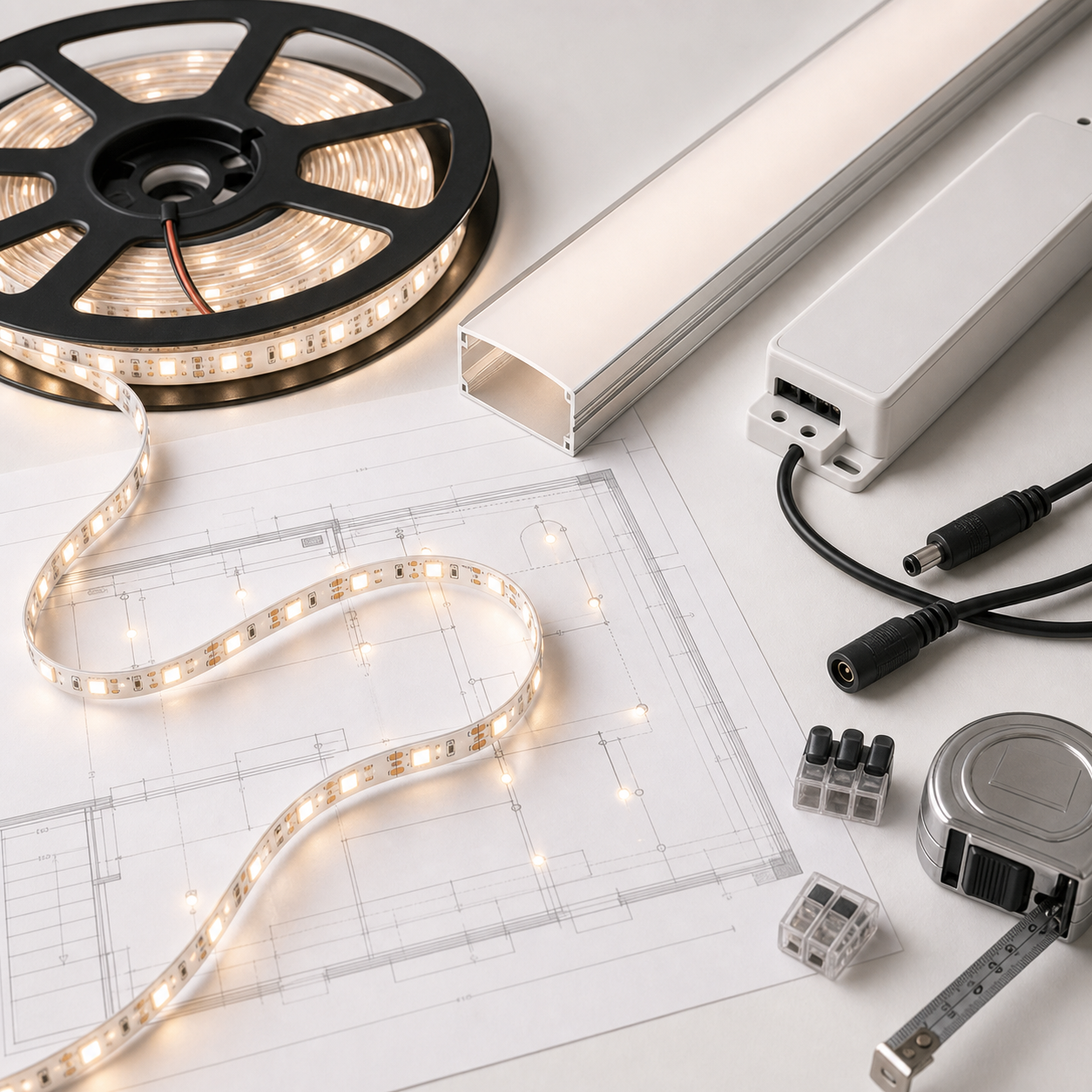
4. Private Label Packaging Helps Brands Look Bigger
For many growing brands, packaging is a key part of market trust. A product sold in plain factory packaging may be acceptable for one project order, but it is not enough for retail channels, distributor shelves, e-commerce, or a professional brand catalog.
OEM/ODM manufacturing can support private-label packaging, product labels, model numbers, manuals, installation guides, and barcode systems. This helps the brand present a complete product line without owning a packaging plant or hiring a large production team.
Good packaging also reduces service cost. Clear installation instructions, wiring diagrams, cut-point notes, driver matching information, and IP rating warnings can prevent many after-sales problems. In LED strip lighting, many failures come from wrong installation rather than only poor materials, so documentation is part of product quality.
5. Quality Control Becomes Easier to Standardize
Quality control is one of the biggest reasons brands choose a serious manufacturing partner. LED strip lights need more than visual inspection. A good production process should check electrical performance, color consistency, soldering, adhesive, waterproofing, aging, packaging, and batch traceability.
Brands should ask OEM/ODM suppliers about:
- Incoming material inspection.
- LED bin and CCT control.
- PCB and soldering inspection.
- Power-on testing and aging test.
- Waterproof test for IP-rated products.
- Packaging inspection and label verification.
- Batch records and warranty handling.
Quality management systems matter here. ISO 9001 quality management is a useful reference for thinking about repeatable processes, documentation, and continual improvement. A lighting brand does not need to use that standard as a marketing slogan, but it should care about the factory’s process discipline.
6. Certification Planning Can Be Built Into the Product Roadmap
Different markets may require different safety, performance, or documentation expectations. A brand selling to North America, Europe, the Middle East, or project-based channels may need to think about certificates, test reports, material declarations, driver certification, and product labeling.
OEM/ODM cooperation can help because the manufacturer may already know which designs are easier to test, which components are commonly accepted, and which product structure creates certification problems. This can save time before the brand invests in large orders or market launch campaigns.
UL Solutions lighting information is a helpful external reference for understanding safety and certification considerations around lighting products and components. For commercial lighting performance and controls, DesignLights Consortium resources can also support specification thinking.
7. Lower Inventory Risk Through Flexible Product Families
Inventory risk is a quiet cost for many lighting brands. If a company orders too many slow-moving SKUs, cash is trapped in the warehouse. If it orders too few fast-moving SKUs, it loses sales. LED strip products can multiply quickly because each series may include different voltage, wattage, CCT, CRI, IP rating, color type, and packaging format.
An OEM/ODM partner can help brands build product families instead of random SKUs. For example, the brand may start with a core range:
- Basic SMD strip for price-sensitive channels.
- COB strip for premium dot-free projects.
- High CRI strip for retail and hospitality.
- IP65 or IP67 strip for outdoor or wet locations.
- RGBW strip for decorative and scene-control projects.
This structure makes catalog planning easier. It also makes replenishment, packaging, and sales training more manageable. A smaller but clearer product line often grows faster than a large but confusing one.
8. OEM/ODM Helps Brands Enter Project Channels
Project buyers do not only ask for a product photo. They ask for specifications, drawings, sample approval, installation details, driver matching, lead time, warranty, and sometimes customized packaging or cable lengths. A brand that wants to sell into hotels, retail chains, offices, and engineering projects needs a stronger supply process.
OEM/ODM manufacturing helps by supporting sample development, technical communication, production planning, and repeat order consistency. This can help the brand move from small retail sales to more stable project orders.
Enton Light supports a broader lighting package for projects, including ceiling lights, recessed downlights, track lights, pendant lights, outdoor lights, and solar lights.
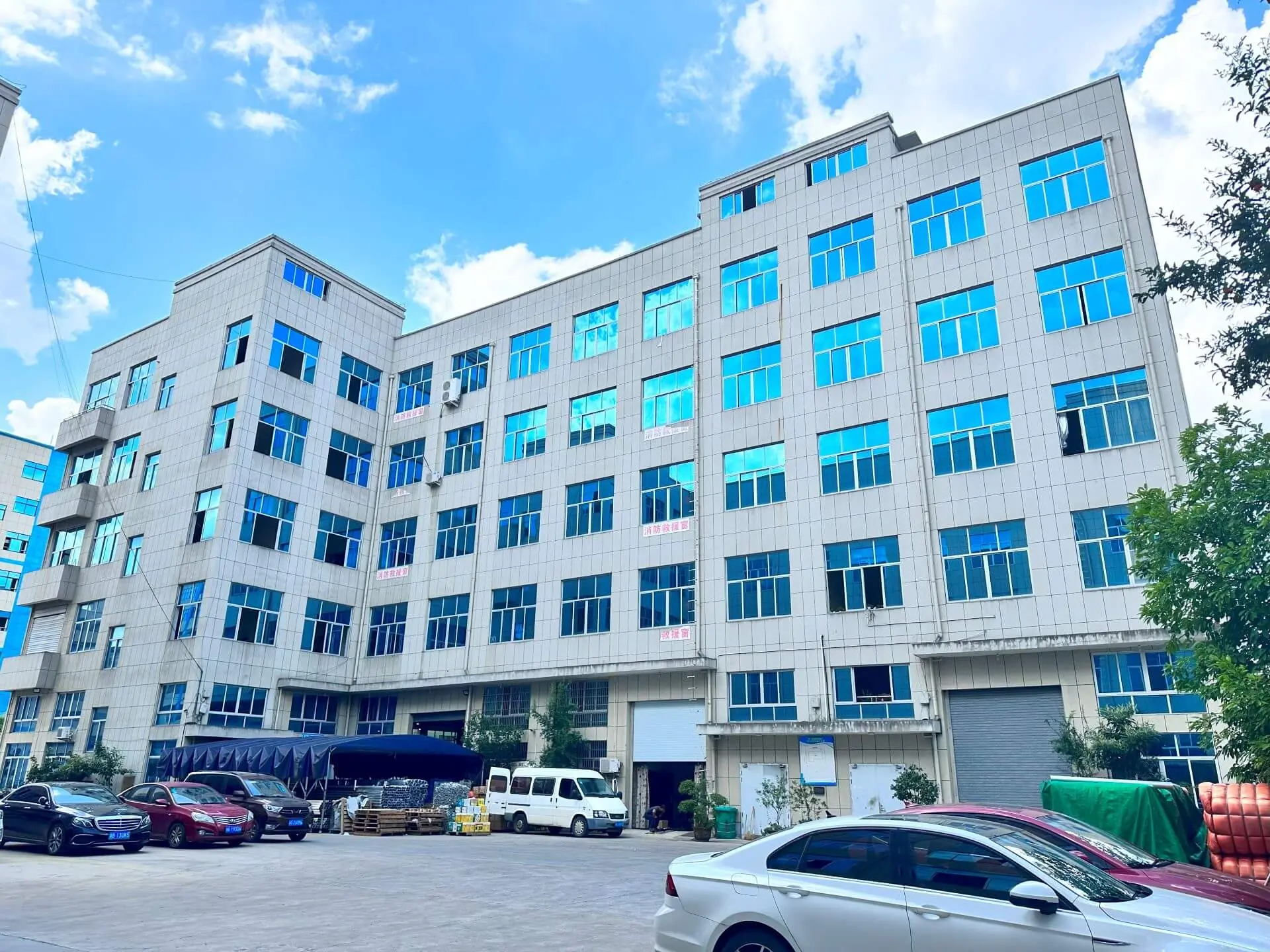
9. Engineering Feedback Improves Product-Market Fit
Product-market fit in LED lighting is not only about design style. It is about whether the product works for real installers, real customers, and real project environments. A factory with engineering experience can provide feedback that a brand may miss during market planning.
For example, the manufacturer may suggest changing a strip voltage, improving copper thickness, adjusting LED density, selecting a better diffuser, changing the connector, or using a different waterproof process. These details can reduce returns and improve the user experience.
Professional buyers should treat the manufacturer as a technical partner, not only a price source. The cheapest quotation may not offer the engineering feedback needed to build a stable brand.
10. Cost Reduction Comes From the Full System, Not Only Unit Price
Many brands think cost reduction means lowering the unit price. That is only one part of the story. Real cost reduction comes from the full system: fewer sample failures, stable production, better packaging, lower return rate, shorter lead time, fewer stock mistakes, and faster product launch.
OEM/ODM manufacturing can reduce cost by:
- Using existing product platforms to lower development cost.
- Combining component sourcing through the factory’s supplier network.
- Reducing trial-and-error during product design.
- Improving packaging and documentation to reduce service issues.
- Supporting batch consistency for repeat orders.
- Helping brands launch new product lines faster.
- Reducing the need for a large internal engineering and production team.
The result is not only cheaper products. The result is a product line that is easier to sell, easier to replenish, and easier to scale.
How to Choose an LED Strip OEM/ODM Partner
Before choosing a manufacturing partner, brands should check more than price. A useful partner should understand product engineering, quality control, packaging, communication, and market requirements.
Here is a practical checklist:
- Does the supplier understand SMD, COB, RGB, RGBW, high CRI, and waterproof strip structures?
- Can the supplier provide stable samples and repeat the same quality in mass production?
- Can they support private-label packaging, manuals, labels, and model numbers?
- Do they understand drivers, controllers, dimming, and accessory matching?
- Can they provide test data, product photos, and technical documents?
- Do they have experience with project buyers, distributors, or brand customers?
- Can they support reasonable MOQ, lead time, and future repeat orders?
- Do they communicate clearly when a specification is risky or unrealistic?
Common OEM/ODM Mistakes Brands Should Avoid
OEM/ODM cooperation can be powerful, but only when the brand manages it carefully. Some common mistakes can create cost instead of savings.
- Choosing only by lowest price: this may lead to poor LED bins, thin PCB, weak adhesive, or unstable drivers.
- Skipping sample testing: a photo and quotation are not enough for LED strip products.
- Ignoring packaging details: unclear instructions can create installation mistakes and after-sales problems.
- Changing suppliers too often: this can cause color inconsistency and unstable product quality.
- Ordering too many SKUs at once: a focused product family is usually easier to grow.
- Not confirming certification needs early: this can delay market entry and increase redesign cost.
How Enton Light Can Support Brand Growth
Enton Light provides indoor, outdoor, and solar lighting products for project and wholesale buyers. For brands planning LED strip product lines or wider commercial lighting packages, Enton Light can support product selection, category planning, and sourcing discussions across related lighting categories.
Buyers can browse the Enton Light shop, review the About page, or send project and product requirements through the Contact page. Clear requirements such as target market, voltage, CCT, CRI, IP rating, packaging needs, order quantity, and certification expectations will help the supplier respond more accurately.
Conclusion
LED strip OEM/ODM manufacturing helps brands reduce cost and accelerate growth because it turns product development into a more organized supply process. Instead of building every detail alone, brands can work with a manufacturing partner that already understands materials, production, testing, packaging, and project requirements.
The best results come when the brand uses OEM/ODM strategically: define the market, choose the right product family, test samples carefully, control quality, plan packaging, and build repeatable supply. With the right partner, LED strip products can move from one-off sourcing to a scalable brand growth engine.
FAQs About LED Strip OEM/ODM Manufacturing
What is LED strip OEM manufacturing?
LED strip OEM manufacturing means a factory produces LED strip products according to a buyer’s brand, specification, packaging, or design requirement.
What is LED strip ODM manufacturing?
LED strip ODM manufacturing means the manufacturer provides existing product designs or engineering platforms that a brand can customize and sell under its own name.
How does OEM/ODM reduce cost for lighting brands?
It reduces development cost, component sourcing cost, trial-and-error, packaging setup time, quality risk, and internal engineering burden. The savings comes from the whole process, not only from unit price.
Is OEM/ODM suitable for small lighting brands?
Yes, if the brand chooses focused SKUs and realistic MOQ. ODM can be especially useful for smaller brands because it allows faster launch from existing product platforms.
Can OEM/ODM factories make private-label packaging?
Many OEM/ODM lighting factories can support private-label packaging, model numbers, user manuals, barcode labels, and installation documents. The exact service depends on the supplier.
What should brands provide before asking for a quote?
Brands should provide target market, voltage, wattage, CCT, CRI, IP rating, strip type, packaging needs, order quantity, certification expectations, and any special accessories or control requirements.
What is the biggest risk in LED strip OEM/ODM sourcing?
The biggest risk is choosing by low price only and skipping technical verification. Brands should test samples, confirm components, review packaging, and check quality control before mass orders.