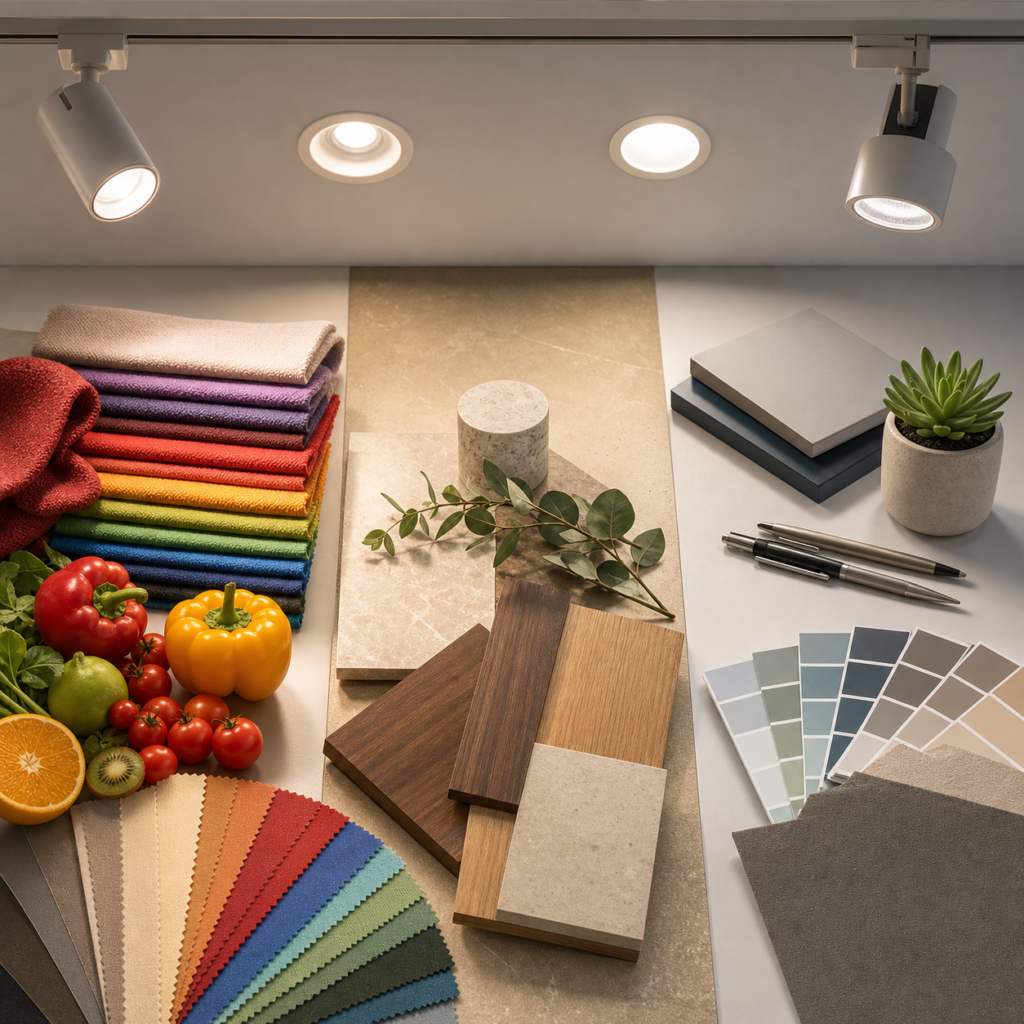
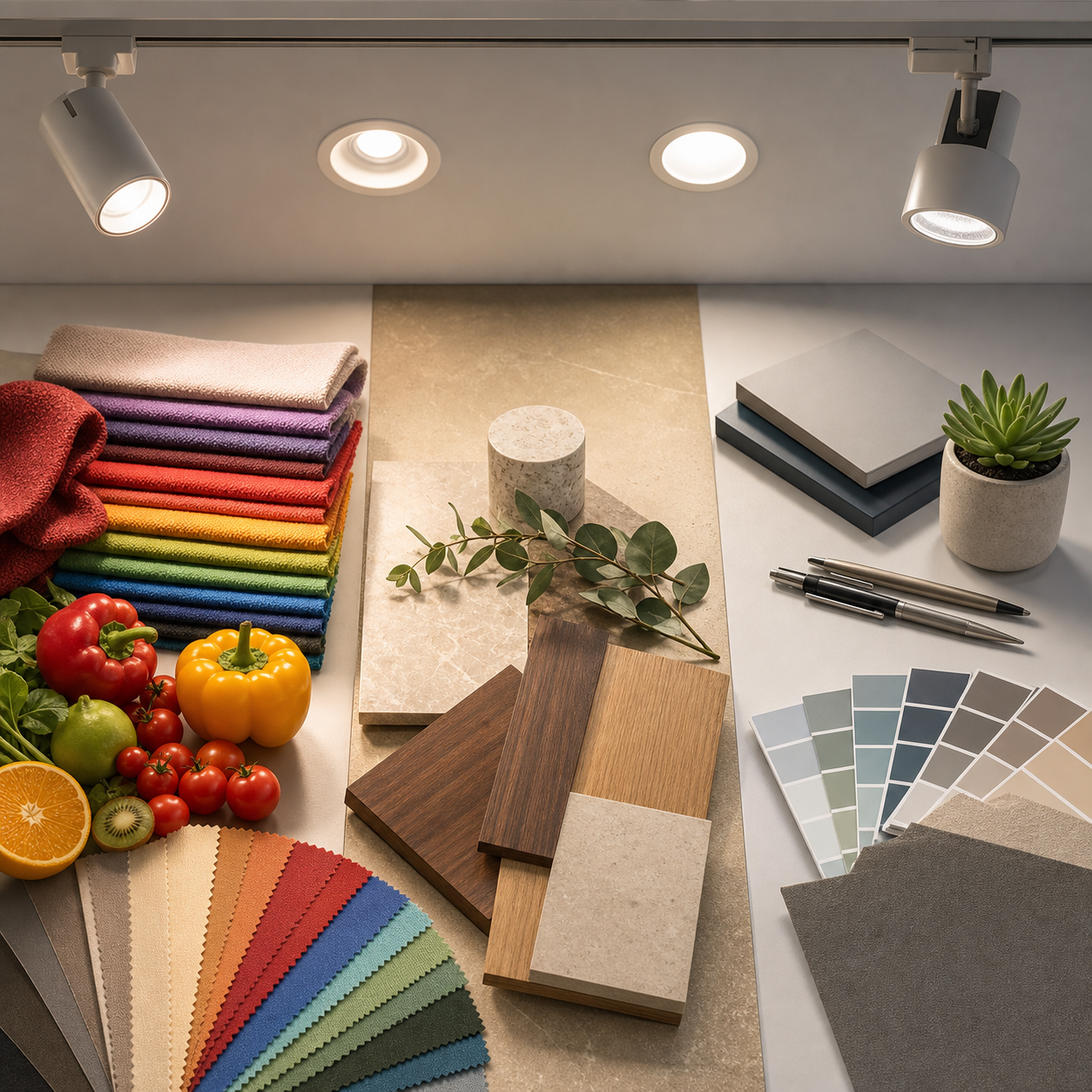
High CRI lighting is becoming more important in commercial projects because people do not only see brightness. They see product colors, skin tones, wood grain, fabric texture, food freshness, wall finishes, and work materials. In retail, hospitality, and office environments, those visual details can change how a space feels and how confidently people make decisions inside it.
CRI stands for Color Rendering Index. It is a common lighting metric used to describe how accurately a light source renders colors compared with a reference source. A higher CRI usually means colors look more natural and less distorted. For project buyers, this matters because two LED lights with the same wattage and color temperature can make the same object look very different.
This guide explain why high CRI lighting matters in retail stores, hotels, restaurants, and office spaces, and how professional buyers can select LED fixtures that support better color quality. Enton Light supplies related indoor lights, track lights, recessed downlights, and other project lighting options through the All Products page.
What Does High CRI Lighting Mean?
CRI is measured on a scale up to 100. A score closer to 100 means the light source renders test colors more closely to the reference source. In many commercial projects, CRI 80 is treated as a basic acceptable level, while CRI 90+ is often preferred when color appearance is important.
The key point is simple: CRI does not measure how bright a light is. It measures color rendering quality. A low-CRI light can still be bright, but it may make red, blue, green, wood, skin, fabric, or food colors look flat or slightly wrong.
ENERGY STAR downlight criteria describe CRI as a color quality factor related to how objects shift in color under a light source compared with a reference source. For professional buyers, that definition is useful because it connects CRI directly with how customers and users experience a space.
Why CRI Matters More in Commercial Spaces
In a warehouse corridor, basic visibility may be enough. In a retail store, hotel lobby, restaurant, showroom, or modern office, color quality becomes part of the business result. A fixture that saves energy but makes merchandise look dull can hurt the project in a different way.
Commercial spaces need lighting that supports both function and perception. High CRI lighting can help:
- Make product colors look closer to their real appearance.
- Improve the perceived quality of fabrics, furniture, food, cosmetics, and finishes.
- Support warmer and more comfortable hospitality environments.
- Help office users read visual materials and finishes more accurately.
- Reduce mismatch between showroom lighting and daylight or home lighting.
- Strengthen the overall premium feeling of the interior design.
High CRI Lighting in Retail Environments
Retail lighting directly affects product presentation. Clothing, shoes, cosmetics, jewelry, fresh food, furniture, and home decor all depend on accurate color. If the lighting renders colors poorly, customers may see products differently in the store than they do outside or at home.
High CRI lighting helps retail spaces in several ways. It can make fabric colors more trustworthy, food appear fresher, cosmetics look more accurate on skin, and display materials feel more premium. This is especially important for boutiques, supermarkets, furniture stores, galleries, jewelry counters, and brand showrooms.
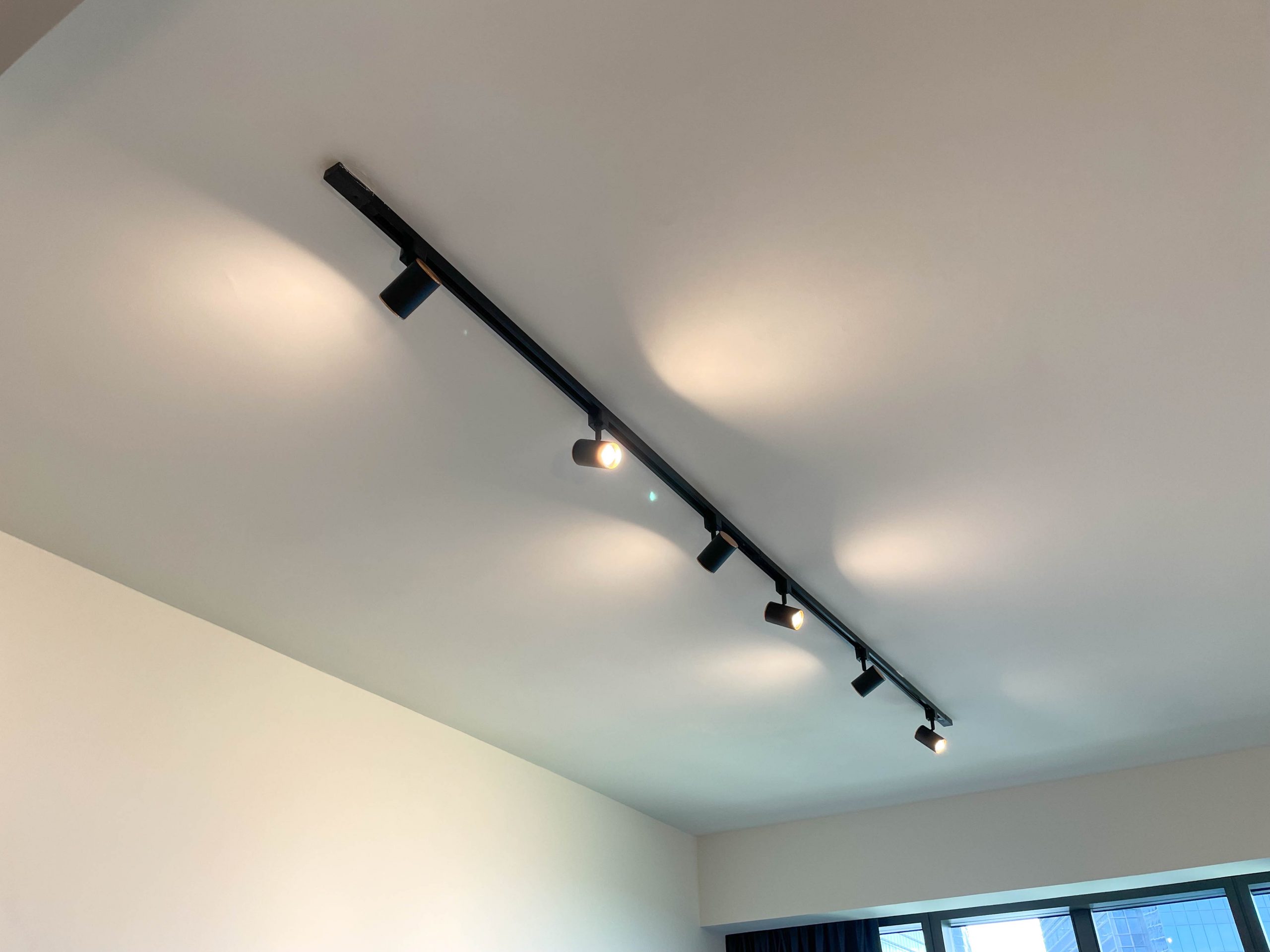
Retail buyers should also consider beam control. High CRI is not enough if the light is badly aimed or creates glare. Adjustable fixtures such as Track Light Fixture #ETI1219 and other spotlights can help project teams place color-accurate light where the products need it most.
High CRI Lighting in Hospitality Environments
Hospitality lighting is about comfort, mood, and material quality. Hotels, restaurants, lounges, resorts, and reception areas often use wood, stone, fabric, metal, plants, artwork, and warm finishes. Low color rendering can make these materials look cheaper than they really are.
High CRI lighting helps hospitality spaces preserve the richness of interior finishes. Wood can look warmer, stone texture can look more natural, upholstery can keep its intended tone, and food can look more appetizing. For restaurants and hotel dining areas, red rendering is especially important because it affects meat, fruit, skin tone, wood, and warm decorative materials.
Buyers should not choose CRI alone. Hospitality projects also need the right CCT, glare control, dimming, and fixture style. Warm white with high CRI is often useful in restaurants and hotel rooms, while lobbies and conference areas may use a more neutral tone depending on the brand design.
High CRI Lighting in Office Environments
Office lighting is sometimes treated as a simple productivity requirement, but color quality still matters. Offices use printed documents, brand materials, presentation boards, wall finishes, furniture, plants, screens, and shared collaboration areas. Poor color rendering can make interiors feel flat or slightly uncomfortable.
High CRI office lighting supports a cleaner and more professional visual environment. It can help design teams review samples, help marketing teams evaluate printed colors, and make meeting rooms feel more polished. For creative offices, showrooms, architectural firms, and design studios, CRI can be part of the specification rather than an afterthought.
For general offices, CRI 80 may be acceptable in many cases. But when the office includes client-facing meeting rooms, design review zones, presentation areas, or material libraries, CRI 90+ can be a better choice.
CRI, CCT, and Brightness Are Different
Many buyers confuse CRI with color temperature or brightness. These three factors are related, but they are not the same.
- CRI describes color rendering accuracy.
- CCT describes the color appearance of the light, such as warm white, neutral white, or cool white.
- Lumens describe light output.
- Beam angle describes how the light spreads.
A 3000K LED with CRI 80 and a 3000K LED with CRI 95 may feel very different on fabrics, food, wood, and skin tones. A high-lumen fixture with poor CRI may still fail in a retail or hospitality project because the space looks bright but not beautiful.
The U.S. Department of Energy LED lighting guide notes that LED products are available across many applications and that product comparison is important for the intended use. In commercial lighting, CRI is one of the product details that should be compared before approval.
Why R9 Also Matters
CRI is useful, but it does not tell the whole color story. The common CRI value is often based on a set of test colors that does not strongly represent saturated red. That is why many lighting professionals also check R9, which relates to red rendering.
R9 can matter a lot in retail and hospitality. Red appears in food, cosmetics, skin, wood tones, warm fabrics, brand colors, and decorative materials. A fixture can have an acceptable CRI but still render reds poorly. For premium projects, buyers should ask for CRI and R9 data when available.
For more technical projects, buyers may also review TM-30 data if the supplier provides it. TM-30 gives more detailed information about color fidelity and gamut than CRI alone, but not every product datasheet includes it.
High CRI and Energy Efficiency
High CRI can sometimes reduce efficacy compared with lower-CRI versions of a similar product, because better color rendering often requires a different spectrum. That does not mean high CRI is inefficient. It means buyers should compare the full specification: lumens, watts, CRI, CCT, driver quality, optical design, and installation result.
The best project decision is not always the highest lumen per watt. A retail store may accept slightly lower efficacy if the product colors look better and customer confidence improves. An office corridor may choose a more efficient CRI 80 fixture if color accuracy is not critical. Good specification means matching the product to the business function.
Lighting Controls Help High CRI Fixtures Work Better
High CRI fixtures become more useful when they are paired with proper controls. Retail displays may need different scenes for daytime and evening. Hotel restaurants may need brighter light during cleaning and softer light during service. Offices may need dimming for presentations or flexible work zones.
The DOE lighting controls overview explains common control methods such as dimmers, sensors, timers, and photosensors. In commercial projects, controls help the same high-quality fixture support more than one use case.
When dimming is required, buyers should confirm that the LED driver, control protocol, and fixture are compatible. A high CRI fixture that flickers or shifts color badly during dimming will not perform well in premium environments.
Fixture Types That Benefit From High CRI
High CRI can be useful across many LED fixture types. The most important applications are the ones where people judge color, texture, or material quality.
- Track lights: useful for retail shelves, showrooms, galleries, and product displays.
- Recessed downlights: useful for hotels, offices, lobbies, corridors, and general commercial interiors.
- Spotlights: useful for accenting products, artwork, signage, or architectural details.
- Linear lights: useful for offices, hospitality ceilings, counters, and clean architectural lines.
- LED strip lights: useful for shelves, coves, cabinets, hospitality details, and decorative lighting.
For LED strip applications, our article How to Select the Right LED Strip Light for Large-Scale Engineering Projects explains how brightness, voltage, drivers, IP rating, and installation details all affect the final result. Color rendering should be considered together with those same project factors.
Procurement Checklist for High CRI Lighting
Before approving a high CRI lighting order, professional buyers should check:
- Target CRI level, usually CRI 90+ for color-sensitive areas.
- R9 value if red rendering matters.
- CCT choice for the actual environment.
- Fixture lumen output and beam angle.
- Glare control, diffuser quality, and optical design.
- Dimming compatibility and color stability during dimming.
- Driver quality, flicker performance, and warranty.
- Batch consistency for multi-site or phased projects.
- Mock-up results under real materials and real installation distance.
- Certificates, test reports, and supplier documentation.
DesignLights Consortium resources can be useful for buyers who want to think more carefully about commercial lighting performance and controls. For safety and compliance planning, UL Solutions lighting information is another helpful reference around lighting products and components.
Mock-Up Testing Is Essential
High CRI numbers on a datasheet are helpful, but the final decision should include a real mock-up. Test the fixture in the actual space or a sample area using real fabrics, furniture, food, wood, stone, wall paint, and product packaging. This is especially important for retail and hospitality projects where visual impression affects customer experience.
During mock-up testing, compare several fixture options with the same CCT and similar beam angles. Look for color accuracy, glare, shadows, dimming behavior, and whether the space feels natural. The best fixture is the one that supports the project goal, not just the highest number on the paper.
How Enton Light Supports Commercial Lighting Buyers
Enton Light provides indoor, outdoor, and solar lighting products for project and wholesale buyers. For high CRI commercial interiors, buyers can review categories such as ceiling lights, surface downlights, track lights, pendant lights, and spotlights.
For projects that combine indoor lighting with exterior areas, Enton Light also offers outdoor lights, outdoor wall lights, and solar lights. Buyers can browse the shop, learn more about the company on the About page, or send project details through the Contact page.
Conclusion
High CRI lighting is important because commercial spaces depend on accurate color, not only brightness. In retail, it helps products look trustworthy. In hospitality, it protects material richness and atmosphere. In offices, it supports a more professional and comfortable visual environment.
Professional buyers should treat CRI as one part of a complete lighting specification. The best result comes from balancing CRI, R9, CCT, lumen output, beam angle, glare control, dimming, driver quality, and real mock-up testing. When those details work together, LED lighting can make commercial environments look more natural, more premium, and more reliable for everyday use.
FAQs About High CRI Lighting
What is considered high CRI lighting?
CRI 90 or higher is commonly considered high CRI for many commercial and design-sensitive applications. CRI 80 may be acceptable for basic areas where color accuracy is less important.
Is high CRI lighting always brighter?
No. CRI measures color rendering quality, not brightness. Brightness is measured by lumens, while CRI describes how accurately colors appear under the light.
Why is high CRI important in retail stores?
Retail customers judge product colors, fabrics, cosmetics, food, packaging, and finishes under store lighting. High CRI lighting helps products appear closer to their real color.
Why does hospitality lighting need high CRI?
Hotels and restaurants rely on warm materials, food presentation, skin tones, and interior finishes. High CRI lighting helps those details look richer and more natural.
Does office lighting need CRI 90?
Not every office area needs CRI 90, but client-facing spaces, design studios, meeting rooms, material libraries, and presentation areas can benefit from higher color rendering.
What is R9 in lighting?
R9 is a red-rendering value. It is useful because strong red rendering affects food, skin, wood, warm fabrics, cosmetics, and many brand colors.
How should buyers test high CRI fixtures?
Buyers should build a mock-up with real materials, the actual driver, the planned dimming method, and the real installation distance. Compare color, glare, dimming, and overall visual comfort before mass ordering.