
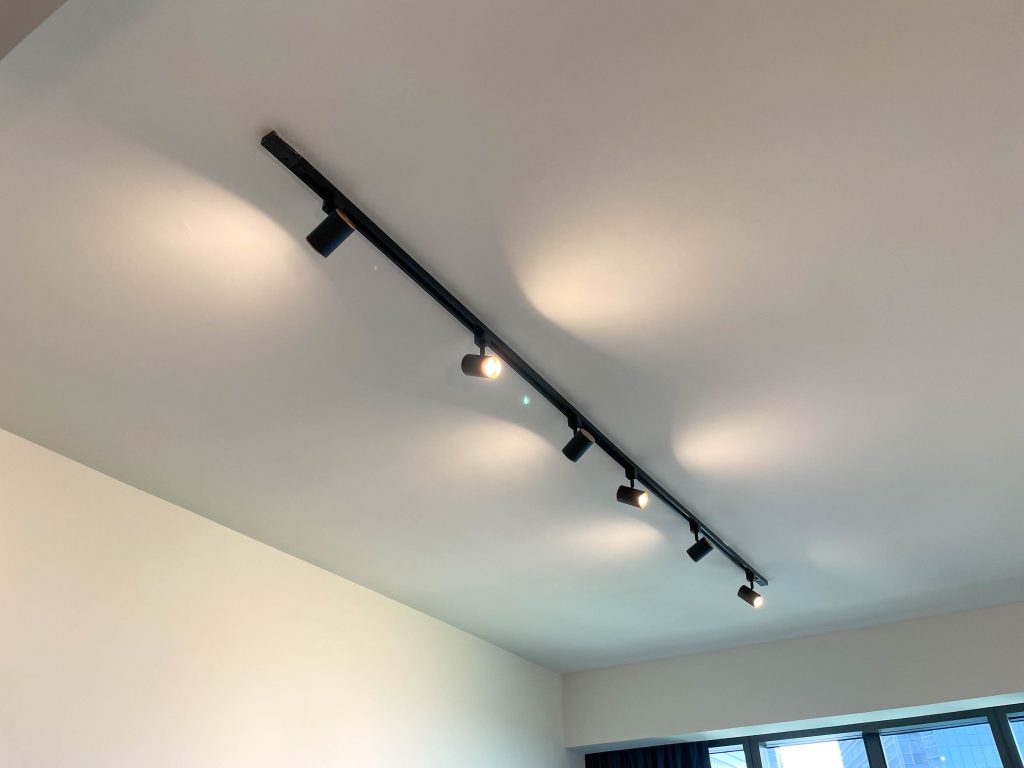
Contemporary retail spaces are expected to change quickly. A fashion boutique may refresh displays every month, a supermarket may move promotional zones every season, and a showroom may need to highlight different collections for different buyer visits. Because of this, architects and retail designers need lighting systems that are precise, flexible, visually clean, and practical for long-term operation.
This is why track lights remain one of the most useful lighting tools in modern retail design. They allow the project team to aim light where it matters, adjust the focus after merchandising changes, combine ambient and accent lighting, and support a clean architectural ceiling without locking every fixture into a fixed location. For buyers comparing fixture options, Enton LED’s track light category and Track Light Fixture #ETI1219 show how track lighting can fit commercial interior projects.
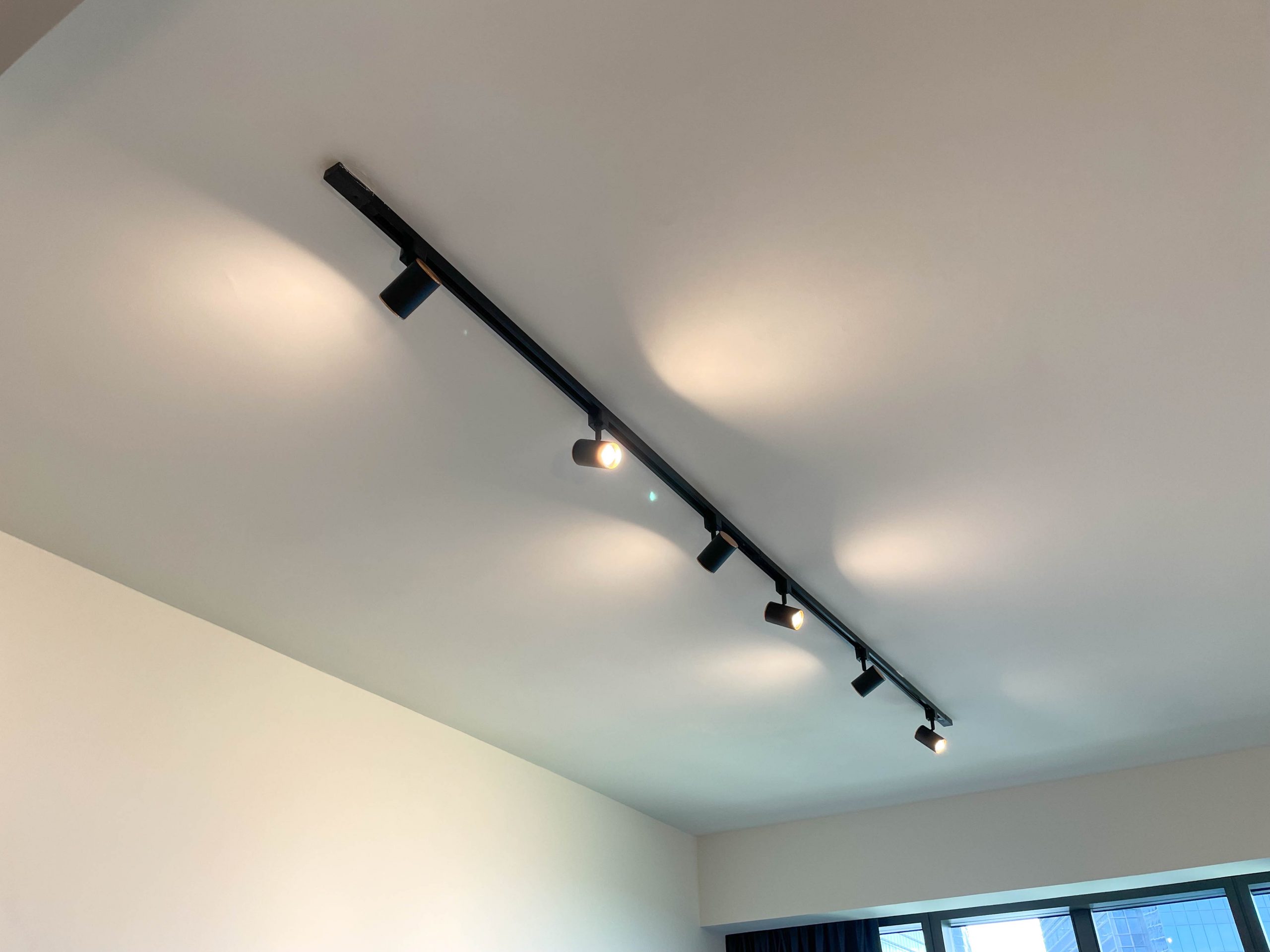
Why Architects Still Specify Track Lighting for Retail
Retail lighting is not only a technical layer. It is part of the spatial narrative. The customer should understand where to look, how to move, which products are important, and what level of quality the brand wants to communicate. Track lighting supports that goal because it can be changed without redesigning the entire ceiling.
In contemporary retail projects, track lights are commonly used for:
- Feature walls, brand graphics, and seasonal displays.
- Gondola shelves, racks, tables, and product islands.
- Window displays and visual merchandising zones.
- Cash desks, service counters, fitting areas, and consultation tables.
- Gallery-style product presentations, showrooms, and pop-up retail concepts.
- Flexible stores where display layouts change frequently.
Unlike fixed recessed downlights, track lights can be re-aimed. Unlike decorative pendants, they can be more technical and focused. Unlike large panels, they can create contrast and drama. For architects, this makes track lighting a practical bridge between design intent and operational retail reality.
Start with the Retail Lighting Hierarchy
A strong retail lighting plan usually has more than one layer. Track lights are powerful because they can contribute to several of those layers at once, but the architect should still define the hierarchy before choosing fixtures.
The main layers include:
- Ambient lighting: the general visibility level that allows customers and staff to move comfortably.
- Accent lighting: focused light on products, mannequins, shelving, textures, signage, or feature displays.
- Task lighting: practical light for payment counters, consultation desks, service areas, and stock handling points.
- Decorative lighting: visible fixtures or lighting details that express the store’s brand character.
- Wayfinding lighting: brighter or more focused cues that guide customers through the sales floor.
Track lighting is most often used for accent and wayfinding layers, but it can also support ambient lighting when combined with wide beams or linear track modules. The key is to avoid making every fixture do the same job. A retail ceiling should read like a controlled composition, not a grid of random spotlights.
Use Contrast to Direct Customer Attention
Retail spaces need visual contrast. If the whole store is lit evenly, customers may see everything but notice nothing. Track lights help architects create brighter focal points on products, mannequins, wall displays, or promotional tables while keeping circulation areas calmer.
This contrast is especially useful in fashion, furniture, cosmetics, jewelry, galleries, premium food, electronics, and brand showrooms. A focused beam can make a product feel more important. A softly lit wall can make the store feel larger. A brighter display at the end of an aisle can pull customers deeper into the space.
Good contrast should feel intentional, not harsh. If the difference between the display and the surrounding area is too extreme, the store may feel theatrical in the wrong way. If the difference is too small, the lighting will not help merchandising. Architects should use mock-ups or on-site aiming sessions to tune the balance after products and fixtures are installed.
Match Beam Angles to Retail Zones
Beam angle is one of the most important track light decisions. A narrow beam creates a crisp accent and stronger visual focus. A medium beam works for many product displays. A wide beam can soften the space and cover larger shelves or walls. The right choice depends on ceiling height, fixture distance, display size, product material, and the desired level of drama.
Useful starting points include:
- Narrow beams: feature products, jewelry cases, mannequins, artwork, signage, and high-impact display moments.
- Medium beams: clothing racks, shelves, tables, endcaps, feature walls, and most general accent lighting.
- Wide beams: wall washing, broader product areas, lower ceilings, and softer ambient support.
Do not specify beam angle only from a datasheet. The same beam can feel different depending on mounting height, aiming angle, surface color, reflectance, product packaging, and surrounding brightness. For multi-store rollouts, sample testing helps keep lighting quality consistent from one location to another.
Plan Track Placement Before Ceiling Coordination Is Locked
Track lighting gives flexibility, but track placement still needs architectural discipline. If the track is too close to the wall, it may create harsh scallops or awkward shadows. If it is too far away, the aiming angle may be weak and the wall may look flat. If tracks do not align with retail fixtures, the store may be hard to re-merchandise.
Architects should coordinate track lines with shelving, display tables, circulation paths, HVAC, sprinklers, ceiling joints, acoustic panels, signage, and camera positions. A clean reflected ceiling plan can make the track feel intentional instead of temporary.
For typical retail walls, track lights are often positioned far enough from the wall to allow comfortable aiming without steep shadows. For tables and product islands, track placement should allow cross-aiming from more than one direction when needed. In showrooms and galleries, a more flexible grid may be useful if displays change often.
Use High CRI Where Product Color Matters
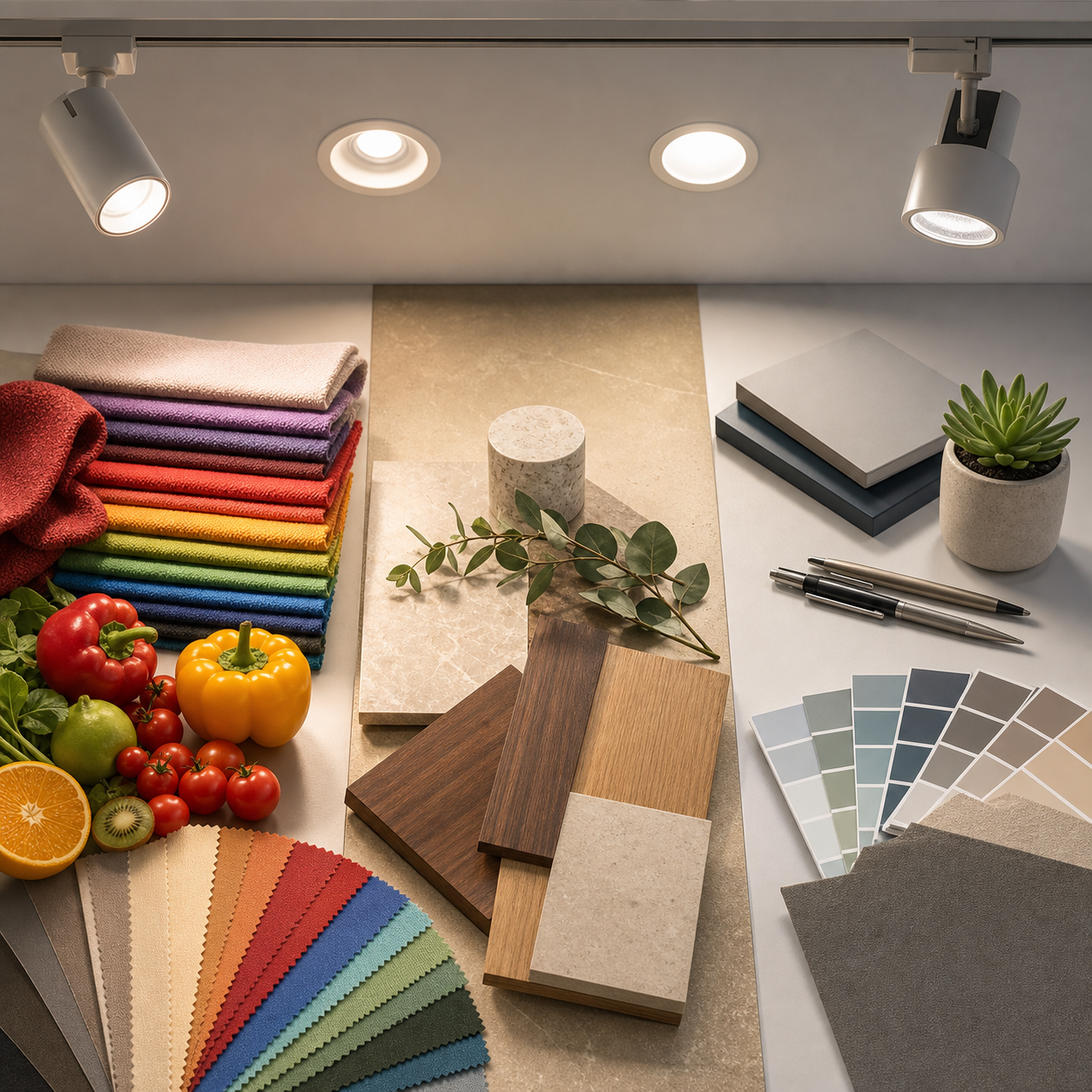
Track lights often aim directly at merchandise, so color quality matters. Clothing, cosmetics, food, furniture, wood, leather, stone, artwork, packaging, and brand colors can all look wrong under poor color rendering. Customers may not understand the technical reason, but they will feel that the product looks dull, cheap, or different from expectation.
For many retail applications, CRI 90+ is worth considering, especially in boutiques, cosmetic stores, supermarkets, food displays, galleries, furniture stores, and premium showrooms. In red-sensitive categories such as food, cosmetics, wood, leather, and warm fabrics, buyers may also ask about R9 or more detailed color data when available.
Enton LED’s guide to high CRI lighting in retail, hospitality, and office environments explains how color rendering affects commercial perception. The U.S. Department of Energy LED lighting guide also emphasizes that LED products vary across applications, which is why professional buyers should compare product performance for the intended use.
Choose CCT by Brand Positioning and Product Category
Color temperature affects the emotional tone of a retail space. Warm white lighting can feel intimate, premium, relaxed, and hospitality-driven. Neutral white can feel balanced, clean, and versatile. Cooler white can feel bright and energetic, but it can also feel harsh if used without care.
There is no single CCT that works for every store. A luxury boutique may prefer 2700K or 3000K. A modern fashion store may use 3000K or 3500K. A supermarket may use different CCTs for fresh produce, bakery, meat, and general aisles. A technology showroom may use a cooler neutral tone to support a cleaner brand image.
Architects should check CCT against real materials and products. White walls, natural wood, brushed metal, colored packaging, mirrors, skin tones, and digital screens can all respond differently. For chains, CCT consistency also matters because one store should not feel warm and another store cold unless the concept deliberately changes by location.
Control Glare Before It Reaches the Customer
Track lights are adjustable, which is useful, but that also means poor aiming can create glare. A fixture aimed too low across the customer’s line of sight can make the store uncomfortable. A high-output spotlight without proper optical control can create bright spots on glossy packaging, mirrors, glass, polished stone, or metal surfaces.
Glare control can be improved through fixture shielding, deep reflectors, honeycomb accessories, lenses, baffles, controlled beam angles, and careful aiming. Black finishes may visually reduce glare in some ceiling concepts, while white finishes may blend better into the architecture. The right decision depends on the ceiling, brand identity, and customer viewpoint.
Architect tip: Review the space from the customer’s eye level, not only from the floor plan. Walk the main entry path, look toward feature walls, stand at fitting room mirrors, and check the cashier line. Glare often appears where the drawing looks perfectly acceptable.
Design for Merchandising Flexibility
Retail layouts change. Seasonal tables move. Wall displays refresh. New product categories arrive. A lighting system that only works for the opening-day layout can become a problem within months. Track lighting gives merchandisers the ability to redirect focus without cutting new holes in the ceiling.
For flexible stores, architects should consider:
- Track lines that support several display layouts, not only the first plan.
- Enough circuiting or control zones for window, wall, table, and circulation areas.
- Fixture quantities that allow some re-aiming without leaving dark gaps.
- Compatible accessories for future beam changes or glare control.
- Clear store maintenance instructions for aiming and replacement.
This is also where product family planning becomes useful. A supplier that can offer related wattages, beam angles, finishes, and accessories helps the designer keep the store visually consistent while still adapting to different retail zones.
Integrate Controls and Scenes
Lighting controls help track lights support more than one retail condition. A store may need a daytime scene, evening scene, cleaning scene, window display scene, event scene, and after-hours security scene. Controls can also reduce unnecessary energy use when daylight, operating hours, or occupancy change.
The U.S. Department of Energy lighting controls overview explains common control methods such as dimmers, timers, sensors, and photosensors. For retail projects, the practical issue is compatibility. The track light, driver, dimming method, and control system should be confirmed before mass ordering.
Buyers should ask about dimming range, flicker behavior, driver type, control protocol, minimum load requirements, and whether the fixture remains visually stable at lower output. A beautiful retail scheme can be damaged if lights buzz, flicker, step unevenly, or shift color during dimming.
Coordinate Track Finish with Interior Architecture
Track lighting is visible. That visibility can be an advantage if the system matches the design language, or a distraction if it looks accidental. In contemporary retail spaces, black track can create a graphic ceiling line, white track can blend into plaster ceilings, and custom finishes may support a more branded environment.
Architects should consider whether the track is meant to disappear or become part of the store identity. Minimal fashion boutiques may want clean, quiet lines. Industrial concept stores may allow exposed black track. Premium showrooms may require more refined fixture proportions and consistent finishes across the product family.
For brands that need a more distinctive product line, Enton LED’s article on custom design modifications for lighting brands explains how finish, housing design, beam options, installation details, and packaging can become part of a competitive strategy.
Think Beyond the Fixture: Maintenance and Re-Aiming
A retail store is not finished on opening day. Staff will replace products, move shelves, clean displays, update posters, and adjust seasonal campaigns. Track lights should be easy to re-aim and maintain without specialist intervention every time the store changes.
Project teams should document the original aiming plan, fixture type, beam angle, CCT, CRI, wattage, driver option, and track circuit. For multi-store rollouts, this record helps each location maintain a consistent brand atmosphere. It also helps purchasing teams order replacement fixtures that match the installed system.
Lead time should be planned early. Enton LED’s guide on lead times and shipping for bulk LED orders explains why samples, production, inspection, and shipping should be aligned with the construction schedule.
Specification Checklist for Retail Track Lights
Before approving track lights for a contemporary retail project, architects, contractors, and buyers should confirm the full specification, not only wattage and price.
- Track type and compatibility with the selected track system.
- Fixture wattage, lumen output, and efficacy.
- Beam angle options and optical accessories.
- CRI, R9 when needed, CCT, and color consistency.
- Dimming method, driver quality, and control compatibility.
- Glare control accessories such as honeycomb, baffle, or lens options.
- Housing color, finish quality, and visual match with the ceiling design.
- Thermal design, expected lifetime, warranty, and service support.
- Certifications, test reports, labels, and documentation for the target market.
- Packaging, model numbering, spare parts, and repeat order consistency.
For commercial buyers, supplier reliability matters as much as product appearance. Enton LED’s article on red flags when choosing a commercial lighting supplier can help buyers evaluate communication, documentation, production control, and after-sales risk.
How Enton LED Supports Retail Track Lighting Projects
Enton LED supplies indoor lighting products for commercial and retail applications, including track lights, spotlights, downlights, pendant lights, ceiling lights, and other indoor lights. Project buyers can also browse the All Products page to compare related fixture categories.
For retail projects, Enton LED can help buyers discuss beam angle, CCT, CRI, housing finish, track compatibility, dimming, samples, packaging, bulk order planning, and repeat order control. For larger sourcing programs, the article on how a one-stop lighting manufacturer saves time and money explains why coordinated product selection, packaging, quality control, and logistics can simplify the whole purchasing process.
Conclusion
Track lights are valuable in contemporary retail spaces because they combine architectural control with merchandising flexibility. They help designers highlight products, guide customer attention, adjust to layout changes, protect color quality, and support different retail scenes without rebuilding the ceiling.
The best result comes from treating track lighting as part of a complete retail strategy. Architects should plan the lighting hierarchy, beam angles, track placement, CCT, CRI, glare control, controls, finish, maintenance, and supplier support together. When those details are aligned, track lighting becomes more than an adjustable spotlight system. It becomes a flexible design tool for modern retail performance.
FAQs About Track Lights in Retail Design
Are track lights suitable for luxury retail stores?
Yes. Track lights can work very well in luxury retail when the fixture design, beam control, finish, CRI, CCT, and aiming are carefully specified. Premium stores often use track lighting because it allows precise product emphasis and flexible visual merchandising.
What beam angle is best for retail track lighting?
There is no single best beam angle. Narrow beams work for focused accents, medium beams work for shelves and product displays, and wide beams work for broader coverage or softer wall lighting. Ceiling height and display size should guide the final decision.
Should retail track lights use high CRI?
High CRI is recommended where product color matters, especially in fashion, cosmetics, food, furniture, galleries, and premium showrooms. CRI 90+ is often useful for these applications, and buyers may also review R9 where red rendering is important.
Can track lights be used with dimming controls?
Yes, but compatibility must be confirmed. The fixture driver, dimming method, track system, control protocol, and minimum dimming level should be checked before ordering, especially for stores that depend on lighting scenes.
Why choose a manufacturer instead of only buying from a catalog?
A manufacturer can help with beam options, finish choices, samples, packaging, documentation, production consistency, and repeat orders. For retail chains, showrooms, and private-label buyers, this support can reduce risk and keep future locations consistent.